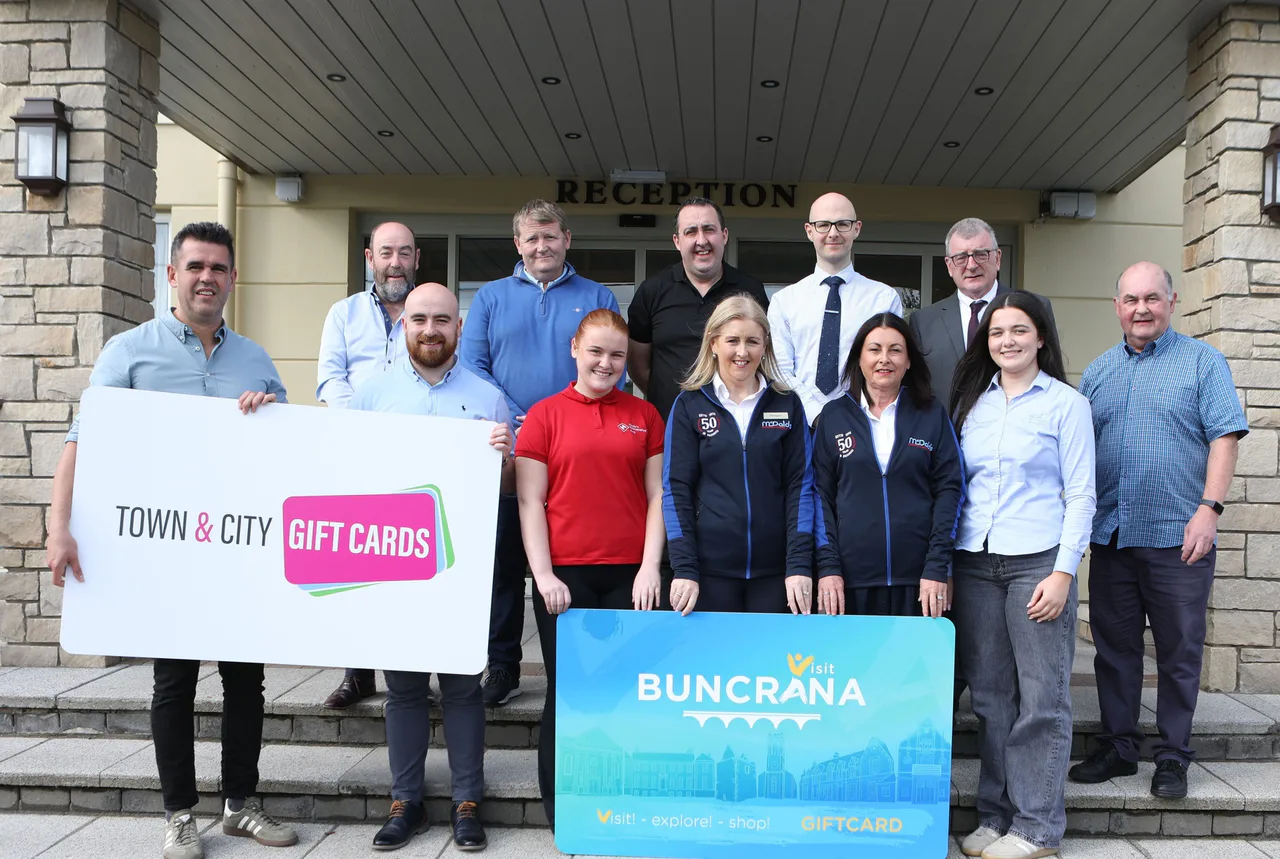
Buncrana businesses are preparing a physical and digital gift card accepted by more than 60 local merchants, with an autumn 2026 launch planned. The September 7 announcement sets a €500,000 first-year spending target. That is the organisers’ ambition, not revenue already achieved by the forthcoming programme. [S01]
Buncrana Businesses Together is leading the project with funding from ten local businesses and technology from Miconex. Shops, restaurants, hotels, pubs and service providers are expected to participate. Cards will be sold locally and online, with redemption at participating physical businesses. [S01]
An existing local business, with administrative limits
The project builds on paper vouchers introduced in 2025. Highland Radio reported more than €100,000 generated over nine months and interviewed group coordinator Paul Brogan, owner of Food For Thought. That earlier activity provides evidence of demand for a shared local voucher, rather than a forecast starting from zero. It must not be counted as sales of the new card. [S02]
Brogan’s explanation identifies a practical reason for the change: running the paper scheme took substantial work. The proposed card programme aims to preserve the shared acceptance network while making administration easier. No quantified saving in staff time has been disclosed. [S03]
What Miconex brings to the arrangement
Miconex is a Perth-based company supplying place-specific gift card programmes. Its Town & City Gift Cards initiative began with a city-wide programme in Perth in 2015; the business now also operates the Downtown Gift Cards brand in North America. Its company profile describes more than 200 participating places and over 27,000 businesses across its network. Those are provider-wide figures, not Buncrana’s local reach. [S04]
The company supplies programme setup, materials and ongoing support as well as technology. For Buncrana’s business group, the procurement logic is to use an established operating system rather than build and maintain one locally. For Miconex, the project adds another community and its merchants to the market for those services. The Buncrana announcement does not disclose the provider’s contract value or fee structure. [S04] [S01]
Keeping the spending local while widening the buyer base
The programme is also intended for employer rewards, adding a potential bulk-purchase channel alongside individual gift buyers. That could concentrate sales in fewer purchasing decisions, but no local employer commitment or expected sales mix has been disclosed. [S01]
The commercial trade-off for merchants is shared choice. A card that works across several kinds of business can appeal to someone reluctant to choose one shop for a recipient. Participating businesses gain access to that pooled gift budget, while competing with one another for the eventual redemption. The value is committed to the local network, not allocated equally to every merchant.
A wider role for hospitality
Donegal County Council’s Buncrana night-time economy adviser, Sophie Gallagher, is working with the business group. She links the card to evening trade and hospitality as well as daytime shopping. That gives the project an economic-development rationale alongside the retailers’ sales objective. [S03]
The outcome will depend on who buys and where recipients spend. Cards purchased by new visitors or employers could bring demand that participating businesses might otherwise miss; cards replacing cash purchases already destined for those shops would have a different effect. Neither case can be established from the target alone.
The immediate business decision is to scale an existing local voucher operation with outside infrastructure and broader purchasing channels. Card sales, completed redemptions and the cost of running the programme will show whether that decision produces the gains its organisers expect.
In this article

Suzie Elis
Suzie Elis covers gift card products, digital gifting and distribution for Gift Card News.