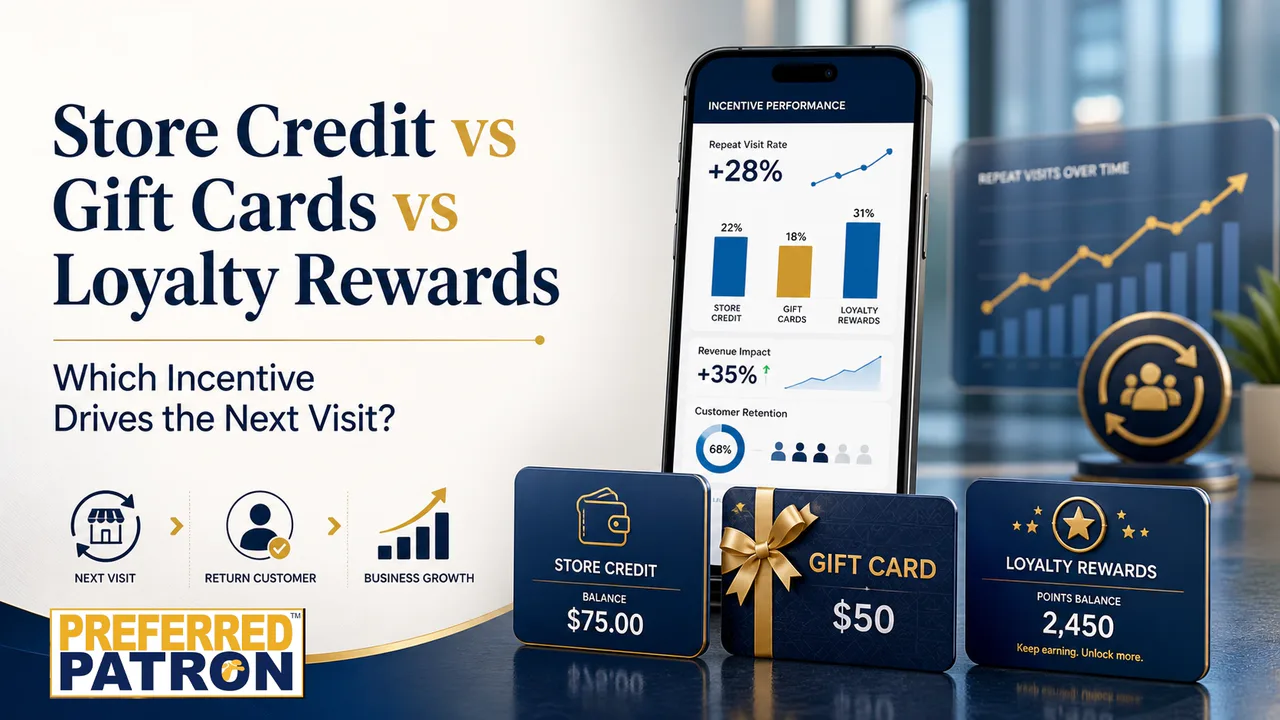
Preferred Patron is making a commercial case for managing store credit, gift cards and loyalty rewards together, while assigning each a different job in a merchant's relationship with a customer. Its May 29, 2026 comparison places service recovery, prepaid gifting and repeat purchasing within the same software proposition. [S01]
The distinction matters because the money arrives from different directions. A purchased gift card brings in funds before the recipient shops. A goodwill credit costs the merchant value to repair a problem. A reward earned through earlier purchases creates an incentive attached to a continuing relationship. Treating every balance as another sale obscures those differences.
A software business behind the comparison
Preferred Patron describes itself as a customer retention platform serving independent businesses through to multi-location operators. The company dates its customer work to 2004 and combines messaging, reward rules and customer reporting rather than selling only a gift certificate tool. [S02]
Its gift card product is closed-loop: value is spendable within the merchant's store, related locations or an authorized private group. The merchant manages its own program, with its point of sale recording the purchase and Preferred Patron tracking the remaining balance. This is distinct from issuing a general-purpose payment card. [S03]
The published pricing page currently lists a dedicated gift card plan at US$30 per month for each location. That recurring fee gives the provider a revenue model even when it does not charge for each in-store gift card transaction. [S04]
Why the three instruments have different economics
The May comparison associates store credit with returns, recovery and offers intended to bring customers back. It places gift cards around prepaid value and purchases where buyer and recipient may differ, and loyalty rewards around repeated visits, spending or milestones. Those are the company's proposed uses, not results from a comparative merchant trial. [S01]
From a merchant's perspective, a gift buyer can introduce a different shopper without a separate advertisement. But the prepaid balance still represents a purchase the business must fulfil. Cash received today is therefore not automatically an equivalent profit today.
Promotional credit raises another question: would the customer have returned without it? A credit can help preserve a relationship after poor service, yet rewarding an already certain purchase merely transfers some of the merchant's economics to the buyer. A return-generated balance also needs to be distinguished from a discretionary promotional award.
The business case for combining these records is better attribution. A merchant can distinguish a first redemption from a later paid visit, rather than celebrating all activity as growth. That requires consistent treatment of refunds, incentives and repeat purchasers; one dashboard cannot supply a counterfactual on its own.
What the provider stands to gain
For Preferred Patron, the proposition broadens the reasons a merchant might retain its subscription. A company that uses the system for outstanding gift balances, recovery credits and customer campaigns has more recurring workflows attached to it.
For merchants, the relevant test is the extra contribution remaining after rewards, software and operating costs. The comparison supports choosing different instruments for different commercial problems. It does not establish that any one of them produces the fastest return or an automatic improvement in margin.
In this article

Daniel Brooks
Daniel Brooks covers payment networks, financial technology, payment security, gift card fraud and PCI DSS for Gift Card News.