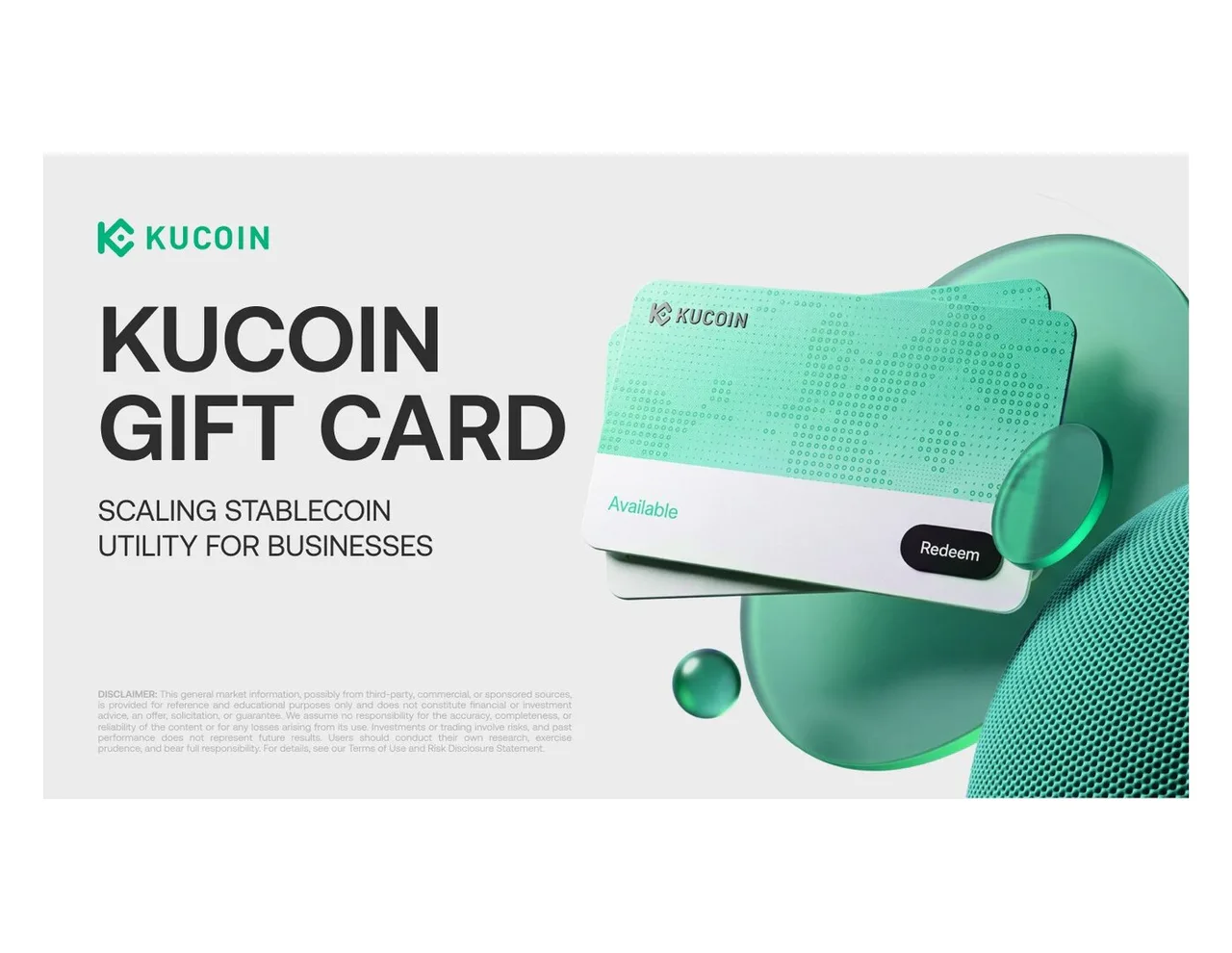
KuCoin Pay launched an enterprise gift-card product on August 6, 2026, allowing businesses to distribute USDT and USDC through digital codes. Bulk issuance and an API connect the product to customer promotions and employee rewards, while recipients redeem the value into a KuCoin account. [S01]
This is a different direction of travel from using cryptocurrency to buy a retailer’s gift card. Here the gift card delivers the cryptocurrency itself. The commercial question is therefore how a reward distribution network can bring users and balances into an exchange ecosystem.
A payments business extending an exchange
KuCoin Pay began on January 2, 2025, as a way to use assets held on KuCoin for purchases. Its service is integrated into the exchange’s app, rather than requiring a separate wallet. The company’s explanation also states that identity verification is required to use KuCoin Pay. [S03]
The 2026 enterprise launch adds an inbound distribution mechanism to that spending proposition. A business can fund a promotion with stablecoin value, then give recipients a code rather than arranging an individual transfer to each person’s external wallet. The launch release says redeemed assets can subsequently be held, transferred or used within supported services. [S01]
Who can issue the cards and how the economics work
KuCoin’s merchant guide restricts creation to approved partner merchants with a signed gift-card agreement. Ordinary personal or corporate accounts do not automatically have issuing permission. The guide lists a creation fee, with pricing supplied during onboarding, and allows distributors to choose their own resale price. [S02]
These are unusually concrete clues to the business model. KuCoin has a fee-bearing issuance service; a distributor can build a resale margin or use the cards as rewards inside another programme. The recipient relationship can then continue on KuCoin after redemption. The company has not disclosed the fee scale or resulting revenue.
Operationally, the merchant can use a dashboard or the Merchant Unified API. Each batch must have a common currency and denomination, so varied reward amounts require separate batches. Corporate onboarding includes business verification. Those controls distinguish managed issuance from an unrestricted code generator. [S02]
A new reward format, with a different recipient journey
KuCoin presented the launch as a way to expand digital assets beyond trading. The product connects a company’s incentive budget with a recipient’s platform balance, giving the payment arm another route to participation in the wider ecosystem. [S01]
For an employer or promotion operator, bulk distribution can reduce repetitive sending work. For recipients, the value is more flexible than a balance restricted to one retailer, but it also introduces an exchange account and digital-asset handling into the reward experience. A conventional shop voucher does not require that same journey.
The fit will therefore depend on the audience as much as the issuance tools. A reward sent to an existing platform user has a different adoption hurdle from one sent to someone unfamiliar with crypto. Neither the launch nor the merchant guide establishes universal country availability or measured engagement gains. The confirmed development is a business-controlled channel for issuing stablecoin gifts, with explicit fees and platform-based redemption.
In this article

Suzie Elis
Suzie Elis covers gift card products, digital gifting and distribution for Gift Card News.