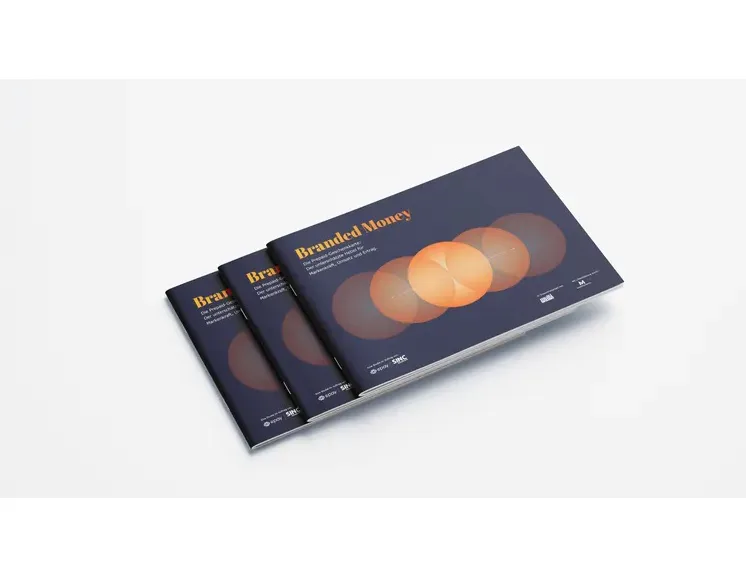
epay and SINC Novation are using commissioned research to make a broader case for gift cards inside retail marketing budgets. Their Branded Money whitepaper, listed on February 25, 2026, links card use with stronger brand perceptions. Multisense conducted the work; epay expanded on the findings in an April 15 announcement. [S01][S02]
The commercial significance lies in the proposed change of category. A gift card sold only as a payment instrument competes on distribution and processing. A card presented as a meaningful encounter with a brand can also compete for attention from the team deciding how that brand attracts customers.
epay is Euronet’s prepaid and payment-processing segment, connecting brands with consumers through retail and digital channels. [S02] SINC Novation supplies gift cards, smart cards and related digital services. [S03] Multisense is a brand and sales consultancy applying research on perception to commercial decisions. [S04]
The sponsors therefore have a direct interest in retailers investing in gift card programmes. That interest does not invalidate the findings, but it helps explain the questions the research asks and why the sponsors want marketing departments to reconsider the product.
Buyers and recipients show different brand-profile comparisons
The online survey involved 6,010 German consumers, five retail brands and 30 touchpoints. It compared card buyers and recipients with people who knew the brands but had not used their prepaid cards. [S02]
Reported brand-profile difference
Reported relative brand-profile differences between prepaid-card buyers or recipients and people aware of the brands who did not use their prepaid cards. Germany, online survey of 6,010 consumers.
%
Tap or hover for details. All values are also available in the data table.
Source
Relative score comparisons, not percentages of people buying cards or causal sales effects. The public release does not disclose group sample sizes, absolute scores, uncertainty, weighting or fieldwork dates. The buyer and recipient values cannot be added.
Show data tableHide data table
| Category | Higher brand-profile score |
|---|---|
| Buyers | 130% |
| Recipients | 116% |
The chart shows separate brand-profile comparisons for buyers and recipients. The values cannot be added to describe a combined effect. [S02]
The research evaluates relevance, experience reach, experience quality and implicitly measured brand associations across thirty touchpoints. The five retail brands are described by sector rather than named in the public methodology. The comparison therefore concerns selected leading brands, not a representative census of every German retailer. [S02]
Stronger experience scores do not establish incremental profit
The whitepaper summary reports 71.4% higher brand experience and a 58.4% higher qualitative evaluation of other brand encounters among card users. These are comparison metrics, not percentages of the population buying gift cards. [S01]
Reported brand-experience comparisons
Two distinct comparison measures summarized by the study sponsors for prepaid-card buyers and recipients, across the five focus brands.
%
Tap or hover for details. All values are also available in the data table.
Sources
These are different research scores and cannot be added or read as purchase shares. Brand-experience volume combines touchpoint relevance and experience reach. Higher reported scores among users do not establish that gift cards caused the full difference or generated incremental profit.
Show data tableHide data table
| Category | Reported relative difference |
|---|---|
| Brand experience | 71.4% |
| Quality evaluation of other brand contacts | 58.4% |
The release defines brand-experience volume as the product of a touchpoint’s relevance and its reach. The 71.4% comparison is consequently a score difference within that framework. The 58.4% result concerns the quality evaluation of other brand encounters and should remain a separate measure. [S02]
A gift purchaser both funds a balance and places a retailer in front of another person. Redemption creates a further encounter. That gives a retailer several possible sources of value from one instrument: prepaid demand, introduction to a recipient and an opportunity to make the resulting visit worthwhile.
However, a person already enthusiastic about a retailer may be more likely to buy its card and rate it positively. A recipient may also have been chosen precisely because the giver knew that preference. Stronger brand scores can therefore accompany card use without being caused entirely by it.
The public methodology does not describe random allocation or disclose fieldwork dates, recruitment and weighting in enough detail to resolve those alternatives. [S02] The business mechanism is credible; the size of the incremental effect remains a separate question.
A customer paying for a card brings money into the programme, but the retailer still promises goods or services in return. Distribution, processing and any promotional incentive also have a cost. Calling a card a marketing contact should not make those obligations disappear from the commercial assessment.
For epay and SINC Novation, the research supports a move from supplying transactions or cards towards participating in brand strategy. For a retailer, it offers a reason to examine the purchaser and recipient relationship more closely. It does not establish that every new card programme will acquire profitable customers or outperform another use of the marketing budget.
In this article

Oliver Reed
Oliver Reed covers industry acquisitions, investment and market research for Gift Card News.