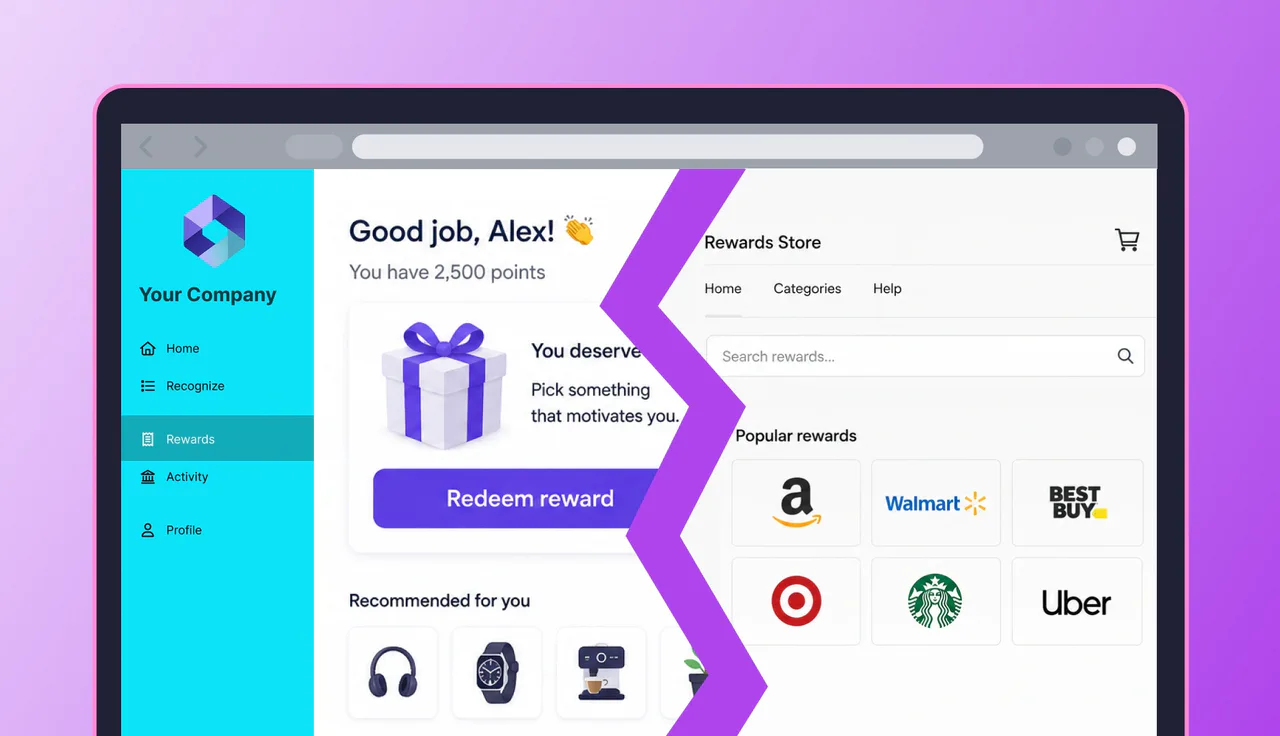
Runa is arguing that employee engagement platforms should retain control of the gift card redemption journey, rather than treating it as a handoff to another website. Its May 28 commentary describes a familiar break in the experience: an employee receives recognition in one application, then encounters different branding, navigation and delivery messages when claiming the reward. [S01]
The issue is commercial as well as visual. Redemption is where the employee receives usable value. A platform that disappears at that point gives up part of the customer experience to its fulfillment supplier, while still carrying much of the blame if the process fails.
An infrastructure supplier wants to sit underneath the brand
Runa was founded as WeGift in 2016, initially supplying digital gift cards through an API. [S02] It now presents branded delivery as a way for other platforms to retain their own relationship with recipients.
Its Runa Shop product describes a white-label gift card marketplace with configurable branding, denominations and promotions, backed by Runa’s fulfillment and reporting. [S03]
That is a recognizable division of labour. The client supplies the audience and the proposition; the infrastructure provider supplies access to reward products and the systems that deliver them. A platform can potentially avoid building separate connections to each merchant, while the supplier gains distribution through the platform’s existing users.
The resulting dependency does not disappear because the interface carries the client’s logo. Catalogue maintenance, fulfillment and support remain operational responsibilities that must be allocated between businesses.
Embedding is a design choice, not a retention result
The May article
Continue reading for free.
Create your account or sign in to get unlimited access.
No payment required. Newsletter signup is optional.
Already registered? Sign inIn this article

Suzie Elis
Suzie Elis covers gift card products, digital gifting and distribution for Gift Card News.