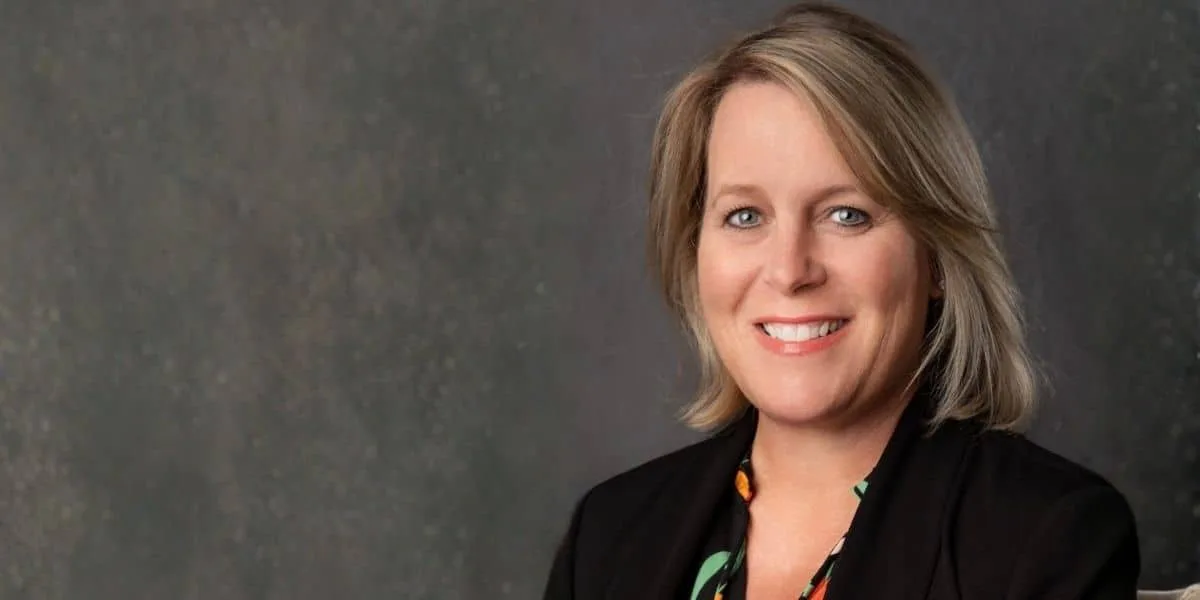
eGifter appointed Jenny DeTerra vice president of merchant solutions on May 5, 2026, bringing an experienced retail gift card operator into a customer-facing leadership role. She assumed responsibilities previously held by Tracey Klein, who was promoted to executive vice president. [S01]
The appointment is commercially relevant because a merchant is not simply buying the ability to issue a card. It is choosing a supplier for sales channels, reporting, promotions and support around money held for future purchases.
An operator moves to the supplier side
eGifter says DeTerra has more than 15 years of experience across store, e-commerce, business and third-party gift card channels. Chief executive Tyler Roye emphasises that operating background. DeTerra describes wanting clearer sales information, stronger security and more ability to change promotions without repeatedly relying on internal technical teams. [S01]
Her account explains the problem eGifter wants to sell against. In a large retailer, the commercial team may know what promotion it wants but still depend on several systems or specialist colleagues to implement it. A configurable supplier product competes partly on reducing that dependency.
Founded in 2011, eGifter operates consumer gift card sales, enterprise rewards and merchant programme technology. That mix gives it exposure to the buying and operating sides of stored value, although it does not itself prove that one configuration will suit every retailer. [S01]
What the merchant product actually covers
Show data tableHide data table
| Area | Capabilities described by eGifter |
|---|---|
| Reporting | Data exports, scheduled reports and reconciliation |
| Promotions | Bonus offers, promotion codes and campaign tracking |
| Access and security | Role-based access, single sign-on and fraud monitoring |
| Order support | Digital-card resend and physical-card reship |
Those functions come from eGifter’s current Client Access Portal description. They are background to the appointment, not capabilities first introduced when DeTerra joined. [S02]
The table illustrates why merchant experience can influence the sales conversation. Reporting, promotions and customer support have different owners and different failure points. A supplier has to show how a change will work across them, not just demonstrate an attractive checkout.
Where eGifter could gain
A leader who has run programmes can translate customer objections into product priorities and implementation discussions. That may help the supplier win or retain business by making its proposal more credible to retail teams. It remains a potential advantage, not a reported pipeline or sales result.
For a merchant, the economic question is whether additional control lowers the time and cost of running campaigns while protecting service quality. Self-service promotion tools could reduce routine requests to technical staff, but they also move responsibility for configuration and permissions closer to the business user.
No compensation terms, merchant contract wins or measured operating improvements were disclosed with the appointment. The relevant follow-up is execution: how long clients take to launch a promotion, reconcile the resulting activity and resolve customer problems.
DeTerra’s appointment strengthens the experience behind eGifter’s merchant proposition. Whether that experience changes the economics of a programme will depend on the tools and support delivered after the sales discussion, rather than on the job title alone.
In this article

Suzie Elis
Suzie Elis covers gift card products, digital gifting and distribution for Gift Card News.