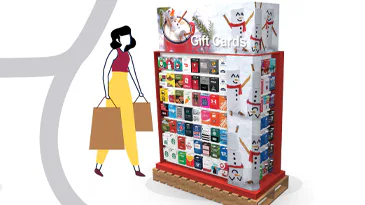
InComm’s May 4, 2023 article argues that visible, organized gift-card displays can help shoppers find cards and notice them during a store visit. Its supporting material is historical consumer research about 2022; the article does not establish a quantified sales lift caused by a particular display. [1]
More spontaneous purchases within a still-planned category
The detailed March 2023 release reports the following open-loop purchase-timing shares. Open-loop cards use a payment network; branded, closed-loop cards have a more restricted redemption scope. The timing categories should not be combined with the differently worded closed-loop questions. [2]
Reported open-loop gift-card purchase timing
The publisher’s three open-loop timing categories, kept separate from its differently worded closed-loop questions.
Reported share (%)
Tap or hover for details. Select a series above to show or hide it.
Source
Historical survey shares, not sales growth or experimental display effects. Sample sizes, precise question bases, weighting, fieldwork dates and geographic coverage are not disclosed in the reviewed public summaries. The source’s inconsistent combined-change annotation is not used.
Show data tableHide data table
| Category | 2021 | 2022 |
|---|---|---|
| Planned in advance | 77 Reported share (%) | 71 Reported share (%) |
| Spontaneous | 17 Reported share (%) | 21 Reported share (%) |
| Last minute | 6 Reported share (%) | 8 Reported share (%) |
Planned purchases remain the largest reported category. The source separately reports closed-loop “always unplanned” responses rising from 2% to 4%, but that is a different question. Its printed combined-change annotation for the open-loop spontaneous and last-minute rows is inconsistent with those displayed values, so this article uses the individual shares. [2]
InComm describes quarterly surveys compiled for annual comparisons. The reviewed public summaries do not disclose sample sizes, exact question bases, weighting, fieldwork dates or geographic coverage. The results therefore remain attributed historical findings rather than a population estimate or a current benchmark. [2] [3]
Channel preferences inform placement, with limits
The detailed tables below put big-box retail ahead of the other displayed channels for both card types. Pharmacy, grocery and online preferences differ by product type; these findings describe shopping preferences rather than the fraction of gift-card revenue captured by each channel. [2]
Selected preferred gift-card purchase channels in 2022
Direct transcription of the Preferred Channel column in the two original tables; both card types are aligned to the same channel order.
Reported preference share (%)
Tap or hover for details. Select a series above to show or hide it.
Sources
Selected categories only: displayed shares total 90% for open-loop and 75% for closed-loop, so they are not normalized to 100%. These are reported preferences, not merchant market shares, transactions or measured display conversions. Geographic coverage and sample bases are undisclosed.
Show data tableHide data table
| Category | Open-loop | Closed-loop |
|---|---|---|
| Big box | 33 Reported preference share (%) | 27 Reported preference share (%) |
| Grocery | 23 Reported preference share (%) | 15 Reported preference share (%) |
| Pharmacy | 13 Reported preference share (%) | 7 Reported preference share (%) |
| Online | 11 Reported preference share (%) | 22 Reported preference share (%) |
| Dollar discount | 10 Reported preference share (%) | 4 Reported preference share (%) |
InComm also reports greater willingness to seek help or visit another retailer when a desired card is missing. Its April summary says email and in-store displays lead stated preferences for hearing about deals. These findings support attention to signposting and stock, while leaving the incremental effect of any fixture unmeasured. [3]
InComm supplies customizable displays in different shapes and sizes and presents them as a way to improve visibility. A retailer assessing that proposition would need actual transactions or a controlled comparison to distinguish the effect of display placement from assortment, stock availability, promotions and store traffic. [1]
In this article

Oliver Reed
Oliver Reed covers industry acquisitions, investment and market research for Gift Card News.