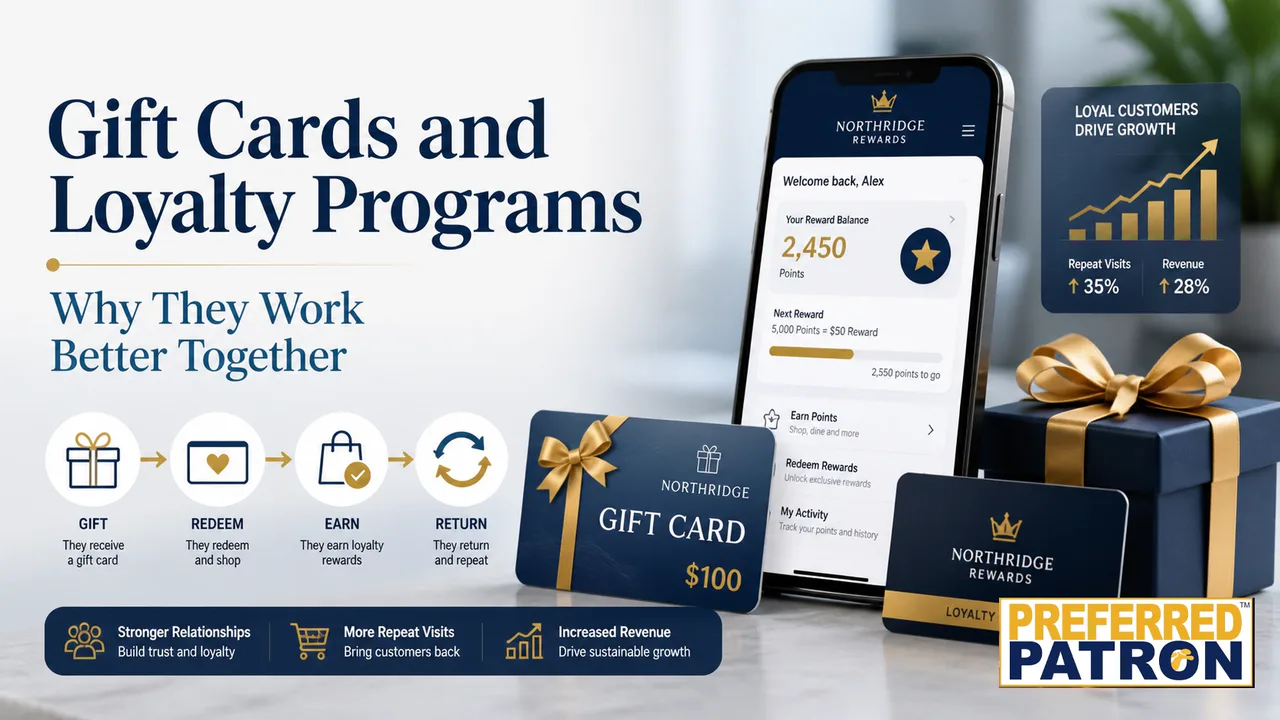
Preferred Patron is encouraging merchants to treat gift card redemption as the beginning of a customer relationship, rather than the end of a prepaid transaction. Its May 8, 2026 publication proposes inviting recipients into loyalty programs when they spend a card, rewarding card buyers with points and using bonus cards around defined spending periods. [S01]
The potential opening is unusually specific: the person who paid for the card may already know the business, while the person presenting it may be visiting for the first time. A merchant that connects those stages can identify whether gifting brought in a new shopper and whether that shopper subsequently returned.
The cost of turning a gift redemption into a repeat visit
A follow-up campaign has a measurable input cost even when repeat revenue remains unproven. Preferred Patron publishes different unit prices for optional extra SMS credits under its plans. These US/Canada rates concern purchased marketing capacity after monthly plan credits, where applicable, are consumed; they are separate from the included transactional messages and from the card balance. [S05]
Published price per additional SMS credit
Optional extra messaging credits for US and Canadian destinations, by subscription plan, observed October 19, 2026.
USD per credit
Tap or hover for details. All values are also available in the data table.
Source
These are credit unit prices, not gift-card fees, message delivery results or complete programme costs. Subscription charges remain separate. Minimum extra-credit purchase is 500 credits; US/Canada transactional SMS is listed separately as included.
Show data tableHide data table
| Category | Price per extra credit |
|---|---|
| Small Business | 0.040 USD per credit |
| Community Connect / Deals | 0.035 USD per credit |
| Growth | 0.030 USD per credit |
| Enterprise / Franchise | 0.025 USD per credit |
Preferred Patron combines loyalty programs, customer messaging and reporting with gift card functions. Its product is marketed to independents and larger multi-location businesses, allowing merchants to present a program under their own brand. [S02]
The gift card software supports branded plastic cards, virtual delivery and a portal for balance checks. In-store processing is included in the subscription; optional online sales integrations may attract a payment processor's separate fees. The absence of a swipe charge does not mean operating a program has no cost. [S03]
That puts the company in the business of managing the relationship around stored value. The merchant supplies the goods or services bought with the card, while the software organizes balances and the follow-up activity that could bring the recipient back.
The company argues that loyalty and gift cards work better together because they serve successive parts of the customer journey. Its examples include birthday rewards, points and future-visit offers. It also promotes digital reward catalogs for points redemption and other incentives. [S01]
Commercially, a gift balance can introduce a shopper without the merchant first paying for an advertisement directed at that person. A follow-up offer then creates a separate cost. Whether that cost is worthwhile depends on an additional purchase, its margin and whether the customer would have returned anyway.
Rewarding the gift buyer and rewarding the recipient can also subsidize two sides of one underlying purchase. That may be a deliberate acquisition expense, but counting both interactions as incremental revenue would exaggerate the program's contribution.
The records matter as much as the offer. A first redemption, a signup and a later purchase made with new money are different events. Combining them can make measurement easier; it cannot establish that the reward caused the second visit without an appropriate comparison.
Preferred Patron's FAQ says merchants retain ownership of their customer data and have tools for opt-ins, unsubscribe requests and exports. Its current pricing terms require opted-in contacts with an established business relationship for outreach and prohibit purchased lists. [S04] [S05]
Inviting a recipient to enroll is therefore a distinct step from spending a card. A gift purchaser's relationship with a store is not automatically the recipient's agreement to receive marketing.
For the vendor, combining card balances with loyalty and messaging expands the platform's role after the initial transaction. For the merchant, the benefit is a chance to earn another visit and understand that customer's behavior. Preferred Patron's publication describes that opportunity, but provides no experiment demonstrating a particular uplift in repeat sales or profit.
The published extra-credit minimum is 500 credits per order. Credits purchased separately do not expire, but a credit price alone cannot establish the cost of an entire campaign or a return on the gift-card strategy. An opted-in recipient, a message delivered and a later paid visit remain distinct records. [S05]
In this article

Oliver Reed
Oliver Reed covers industry acquisitions, investment and market research for Gift Card News.