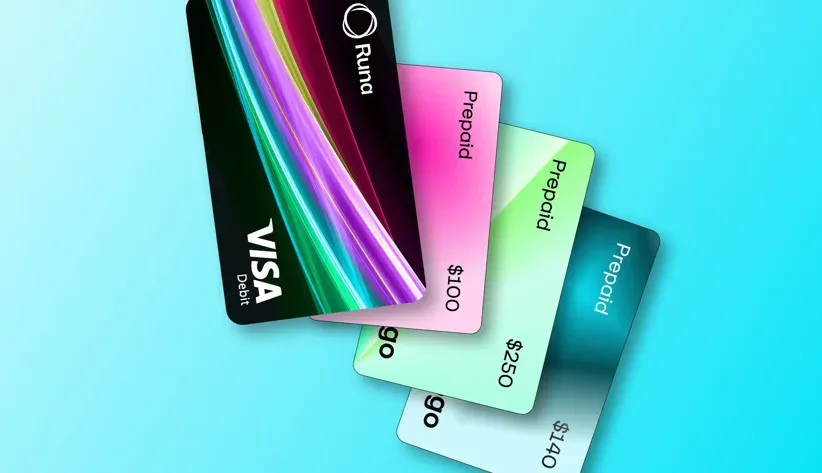
Runa introduced branded prepaid cards on February 12, 2026, giving businesses a choice between a one-off reward balance and a virtual card that can receive subsequent payments. The addition puts open-loop spending alongside merchant gift cards in its payout platform. [S01]
The distinction matters commercially. A retailer gift card directs the recipient toward a particular merchant. A network prepaid card gives the recipient a broader spending choice, while the company funding it can still present the reward under its own branding. Runa is selling businesses access to both approaches through one supplier relationship.
From gift card infrastructure to recurring payouts
Before adopting the Runa name, the business operated as WeGift. Its November 2022 announcement of a £26 million Series B round, led by Element Ventures, identified network expansion, product development and hiring among its investment priorities. The prepaid addition extends that earlier effort to broaden the platform's role in business payments. [S02]
The launch offered custom card artwork and a branded recipient journey, with delivery through a secure link. Runa Reward Prepaid holds a fixed balance; Runa Reload Prepaid allows further funding of the same virtual card. Existing customers were offered access through the API or portal already used for gift cards and push-to-card payments. [S01]
That structure gives Runa a route from occasional campaigns into repeat payment activity. A business using merchant cards for a promotion could add recurring prepaid rewards without contracting another platform. The potential benefit is a larger share of that customer's payout operations, rather than simply a bigger catalogue of retailer names. This is the commercial logic of the product combination, not a disclosed revenue forecast.
A bank-issued card inside a branded experience
Runa's current Reload product documentation identifies Sutton Bank as the issuer under a Visa licence. It describes USD funding, including conversion from other currencies, and an activation process involving email verification, a name and acceptance of terms. These current details clarify the operating model; they are not evidence of every launch-day configuration. [S03]
Runa supplies the business-facing distribution and integration layer. The issuer and network provide different parts of the card arrangement. Custom artwork therefore does not turn the employer or rewards platform into a bank, nor make the stored value equivalent to a retailer's own gift certificate.
For customers paying the same people repeatedly, retaining one card can reduce the need to distribute and explain a fresh credential each time. For recipients, it consolidates successive rewards into one spending instrument. The tradeoff is dependence on that card programme's eligibility, acceptance and terms, rather than an unrestricted transfer into an existing bank account.
The economics depend on the programme
The February announcement did not publish a fee schedule, a named deployment or transaction volumes for the new cards. Its claims of lower payment costs therefore remain a sales proposition rather than a demonstrated saving for a particular business. [S01]
The stronger case for the product is architectural: one integration can support several ways of delivering value, and recurring cards can keep a provider involved after the first reward. Whether that produces a better return depends on the commercial agreement and the recipient experience. Broader acceptance can be useful, but it does not by itself prove higher loyalty or eliminate the economics of funding and servicing a reward.
In this article

Maya Bennett
Maya Bennett covers customer loyalty, employee rewards and incentive programmes for Gift Card News.