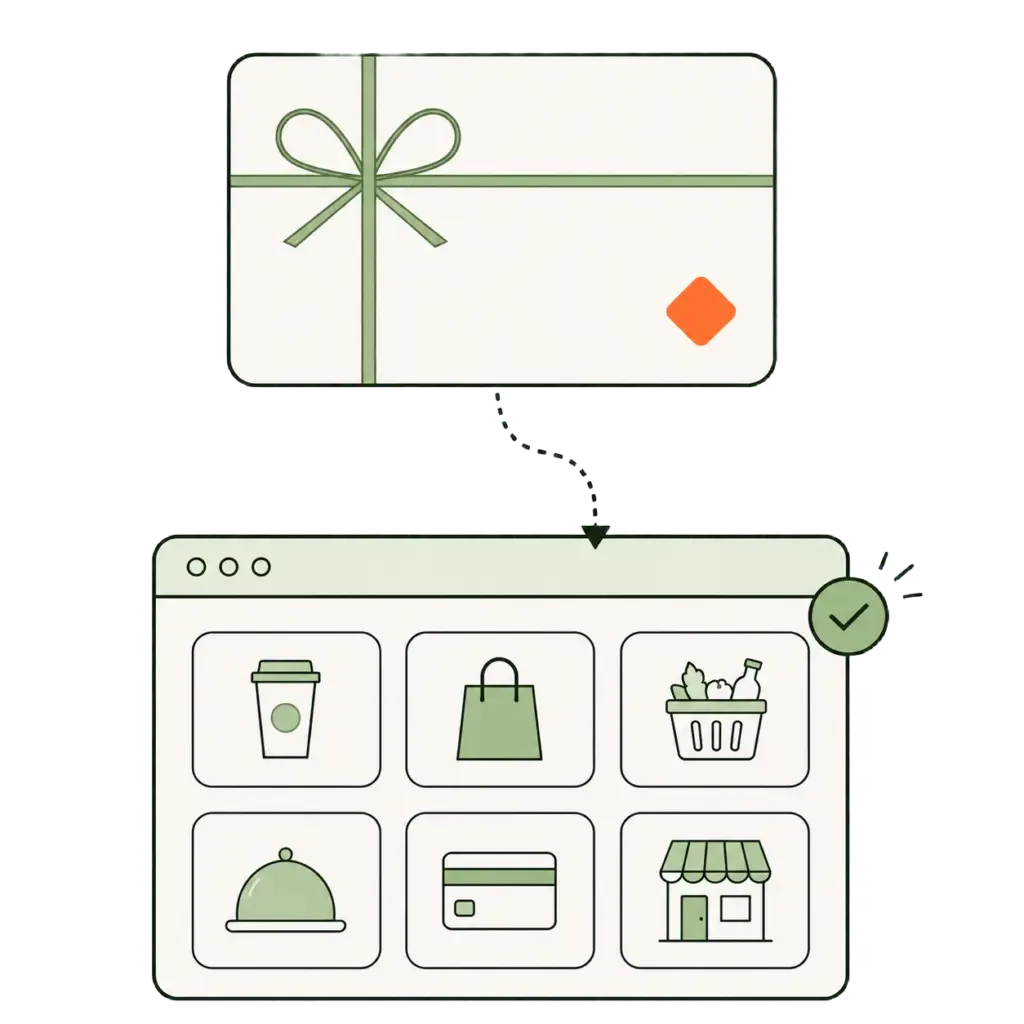
TruCentive's August 12, 2026 commentary proposes featuring one recognisable gift card in an invitation while offering alternatives when the recipient claims it. The important qualification is that the availability of those alternatives belongs in the original offer, rather than appearing as an unexpected change later. [S01]
One brand gets attention, several can receive the spend
The provider uses Amazon as an example of a familiar card that makes an offer concrete. It does not present evidence that an Amazon-led invitation outperforms every multi-brand presentation. Its argument concerns the timing of choice, not an exclusive distribution agreement with that merchant. [S01]
For a sponsor, a recognisable reward can make the exchange easy to understand. A wider redemption menu can then accommodate people who would prefer another merchant. The advertised brand attracts attention, while the recipient's eventual selection determines which reward is supplied.
That arrangement gives the distributor a central role. TruCentive operates a platform for curating, delivering and tracking incentives, placing the choice process inside its service rather than leaving the sender to purchase separate cards manually. [S02]
The selection mode affects who pays fees
The company's product documentation distinguishes SingleSelect, where the sender reserves any applicable merchant fee, from MultiSelect, where a fee on a chosen item is deducted from the recipient's delivery balance. These are different economic experiences even if the initial award amount is identical. [S03]
In one model, the sponsor bears the extra charge to preserve the selected reward's stated value. In the other, the recipient's usable allocation can be reduced by the cost of that particular selection. A promise of choice therefore needs more explanation than a row of logos.
This does not mean every reward carries a fee. It means that fee-bearing options cannot be treated as interchangeable with fee-free ones when assessing the value delivered.
A marketing argument with limits
The commentary draws on broader research about choice and ease of decision-making. It acknowledges that this does not prove one particular gift-card invitation will win in every campaign. [S01]
That restraint matters because a response to the invitation and a completed reward claim are separate outcomes. A campaign may make its initial message clearer while still losing participants during redemption.
For TruCentive, the commercial opportunity is to supply both a simple promotional message and a configurable fulfilment experience. For the sponsor, the hoped-for benefit is wider usefulness without an overloaded invitation. Neither establishes incremental sales, survey completion or retention without programme evidence.
The recipient's expectation is the practical test of the arrangement. The advertised card needs to remain available as promised, alternatives need to be clear, and the selected product's terms need to match the value communicated.
The business idea is persuasive as a design proposition: keep the invitation concrete while preserving choice. Its financial and participation benefits remain dependent on implementation, rather than proven by the familiarity of the featured brand.
In this article

Daniel Brooks
Daniel Brooks covers payment networks, financial technology, payment security, gift card fraud and PCI DSS for Gift Card News.