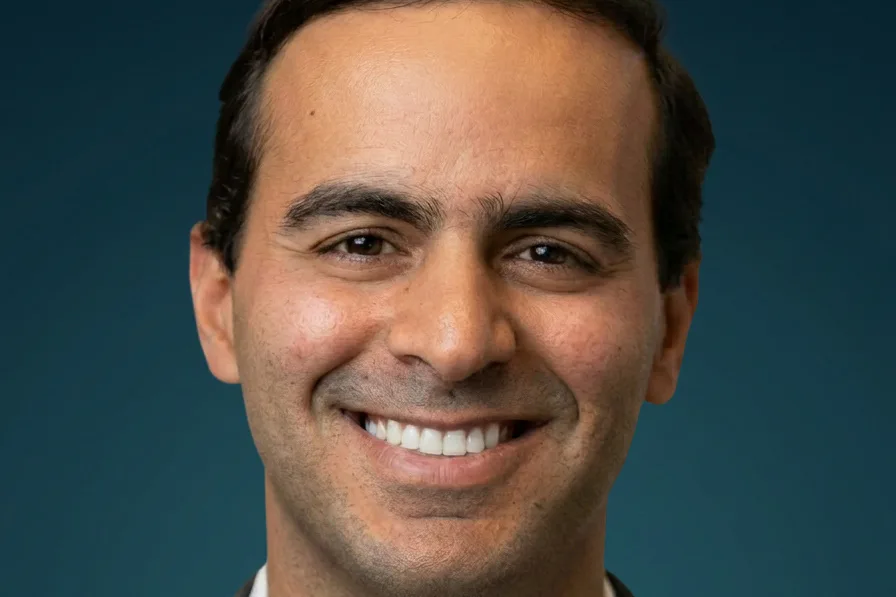
Zenus Bank announced on July 9, 2026 that it had appointed Anibal Carlo, CPA, as chief financial officer, placing financial strategy and regulatory financial management under an executive whose background spans banking, fintech, payments and asset management. The appointment comes as the Puerto Rico-based bank supplies accounts and payment capabilities to other financial businesses, making the finance function part of the infrastructure those partners depend on. The appointment announcement sets out how financial oversight fits the business Zenus has built.
A payments platform can move a large amount of money while holding a much smaller balance sheet. Its transaction volume, client deposits, fee income and available operating cash describe different parts of the business. Managing the connections between them is the financial challenge behind an infrastructure bank's expansion.
In the appointment release, CEO José A. Díaz connected Carlo's financial leadership and regulatory experience with the next stage of the platform's expansion. The emphasis was on strengthening the financial foundation supporting partners' access to U.S. banking services. Source announcement.
A career grounded in regulated financial businesses
Zenus credits Carlo with more than 18 years of experience, including over a decade in senior management and director-level positions. It names Protiviti, Deloitte and the National Futures Association among his previous employers, and identifies reporting, governance, compliance and operational performance as areas of experience. The background described by the bank fits a role that connects commercial planning with the disciplines of operating a regulated institution.
The National Futures Association is the self-regulatory organization for the U.S. derivatives industry, designated by the Commodity Futures Trading Commission as a registered futures association. Its work spans market integrity, investor protection and the regulatory responsibilities of its members. The relevance of that environment is the emphasis on dependable records and controls in financial businesses.
The business he joins is a bank behind partner brands
Zenus's company materials describe a bank founded in 2019 whose offering combines banking infrastructure and technology. Its current institutional model supplies capabilities that a fintech or financial institution can incorporate into its own service. The partner may own the customer interface while Zenus provides underlying accounts, payment access and banking oversight.
For finance management, the unit of analysis changes with that model. A new institutional relationship can create implementation work, ongoing operating costs and transaction activity across several services. The useful commercial question becomes how a relationship performs over its life: the cost of bringing it live, the income its enabled services generate, the resources required to support it and the exposure created by dependence on that partner.
Zenus's subsequent responsible-banking report covers September 2025 to August 2026 and gives a more detailed view of the portfolio behind that model. Bank accounts account for 54.6% of the reported portfolio and cards for 45.4%, an operating mix that is separate from the distribution of income or balances. Zenus 2026 portfolio analysis, page 13.
Bank accounts make up 54.6% of the reported portfolio
The account and card mix gives a view of the operating portfolio behind Zenus's institutional platform.
%
Tap or hover for details. All values are also available in the data table.
Source
Company-reported portfolio composition in the 2026 report. These shares measure the portfolio mix, not assets, customer balances or revenue.
Show data tableHide data table
| Category | Share of portfolio |
|---|---|
| Bank accounts | 54.6% |
| Cards | 45.4% |
Payment volume and financial performance
Core banking provider Tuum's 2026 account of the Zenus platform reports a $75 billion annualized payment-volume run rate, more than $4 billion in monthly total payment volume and over 1,300 financial institution partners. Tuum supplies technology to Zenus, so these are commercially connected disclosures rather than audited financial statements.
Show data tableHide data table
| Published measure | What it describes | Relevance to the finance function |
|---|---|---|
| $75bn annualized payment-volume run rate | An annualized pace of payment processing, rather than completed-year volume or revenue | Capacity planning and the scale of payment operations |
| $4bn+ monthly total payment volume | The value of payments in a monthly operating measure | Settlement funding and the relationship between processing activity, income and expense |
| 1,300+ partners in Tuum's account | The reported scale of institutional relationships | Service costs and the distribution of business across partners |
The economic result depends on the agreed prices and the costs attached to the route, customer and service. Reporting payment volume alongside the income earned and resources consumed is what makes the scale meaningful to a finance team. Zenus's appointment announcement does not publish revenue, profitability or capital targets for Carlo.
The same report identifies a diversified corporate base. The ten largest reported sectors account for 44.1% of corporate entities, with custom computer programming and financial transaction processing the two largest categories. Sector composition gives another view of the types of businesses using the bank's infrastructure. Corporate sector analysis, page 18.
The corporate base spans technology, financial and professional services
The ten largest reported sectors together account for 44.1% of corporate entities in the report.
%
Tap or hover for details. All values are also available in the data table.
Source
The source reports a 44.1% top-ten aggregate; the individually rounded categories sum to 44.2%. No residual category has been calculated. Entity shares are not revenue concentration.
Show data tableHide data table
| Category | Share of corporate entities |
|---|---|
| Custom computer programming | 7.9% |
| Financial transactions processing | 7.8% |
| Management consulting | 6.1% |
| Holding companies | 4.6% |
| Computer systems design | 4.4% |
| Advertising agencies | 3.5% |
| Other professional services | 2.7% |
| Marketing consulting | 2.7% |
| Durable goods wholesalers | 2.3% |
| General merchandise retailers | 2.2% |
Full-reserve economics and financial controls
Zenus's commercial client agreement, effective July 23, 2025, says the bank does not lend customer deposits, does not offer overdrafts or loans under that agreement, and charges account fees. The account terms also state that balances do not earn interest. Those terms explain the general commercial account proposition; they are not a complete tariff or revenue breakdown for negotiated institutional programs.
The finance implication is that payments income must be assessed against the expense of running the service. Compliance reviews, payment-network costs, technology vendors, customer support and exception handling all consume resources even when deposits are fully reserved. Faster growth is economically useful when the resulting service income supports those obligations and the investment required for continued operation.
Customer balances also need to remain distinguishable from the bank's own funds. Zenus is an International Financial Entity regulated by Puerto Rico's OCIF, under license IFE-061, and its legal disclosures state that it is not FDIC-insured. Full-reserve operation describes how the bank treats deposits and remains distinct from deposit insurance.
The corporate account portfolio also includes distinct account types: Corporate DDA, Business DDA and Financial Institution accounts. The reported mix describes the accounts being supported, while the balances and economic contribution of those relationships remain separate financial measures. Corporate account types, page 18.
Corporate DDA accounts dominate the corporate account mix
The source distinguishes three account types within its corporate portfolio.
%
Tap or hover for details. All values are also available in the data table.
Source
Account-type labels and shares are reproduced from the 2026 report. Percentages do not describe balances or fees earned.
Show data tableHide data table
| Category | Share of corporate accounts |
|---|---|
| Corporate DDA | 88.6% |
| Business DDA | 8.4% |
| Financial Institution accounts | 3.0% |
A longer settlement day changes the treasury timetable
Six days before the CFO announcement, Zenus announced its implementation of Kinexys by J.P. Morgan. The addition puts treasury operations alongside the expansion story: payment execution can extend beyond conventional banking windows, while finance teams still need to know where liquidity sits and which obligations it can meet.
J.P. Morgan's Blockchain Deposit Account documentation distinguishes movement inside its network from transfers involving traditional deposit systems. That is a useful distinction for an infrastructure bank's finance function. A balance can exist in one place without being immediately available for a payment on another route. Cash forecasting therefore has to connect balances, funding windows and expected outflows, rather than treating all money as interchangeable at every moment.
Zenus's corporate geography adds context to that treasury task: its 2026 report places 57.3% of corporate accounts in the United States and 42.7% outside it. The split concerns corporate accounts, rather than the bank's much more international overall end-user portfolio. Corporate geographic footprint, page 18.
42.7% of corporate accounts are held outside the United States
The corporate geography is distinct from the geographic distribution of the bank's overall portfolio.
%
Tap or hover for details. All values are also available in the data table.
Source
Company-reported corporate account geography. This is an account distribution, not the distribution of payment value or deposits.
Show data tableHide data table
| Category | Share of corporate accounts |
|---|---|
| United States | 57.3% |
| Outside United States | 42.7% |
Financial stewardship behind the customer experience
The broader industry has documented how closely these financial and operating disciplines are connected. The Federal Reserve, FDIC and OCC's July 2024 industry statement on bank arrangements with third parties discusses access to records, growth and liquidity management alongside the responsibilities of banks and their technology partners.
A rewards or disbursement operator relies on its banking provider to reconcile balances, support expected outflows and maintain the resources needed to run the service. The relationship between processing activity and financial stewardship therefore reaches the recipient: money has to be available when the program promises it, while records show what has moved and what remains owed.
Different customer groups also use different payment routes. In the 2026 usage analysis, SWIFT accounts for 64.9% of corporate transactions, while ACH accounts for 83.6% of individual transactions. That variation connects the platform's customer mix with the payment operations its finance and treasury teams support. Transaction-rail analysis, page 16.
Corporate and individual customers use different payment routes
SWIFT leads corporate transactions, while ACH leads individual transactions in the 2026 usage analysis.
%
Tap or hover for details. Select a series above to show or hide it.
Source
Each series uses its own customer segment's transactions as the denominator. Published rounded shares sum to 99.9% for corporate and 100.1% for individual transactions. These are transaction shares, not payment-value shares.
Show data tableHide data table
| Category | Corporate transactions | Individual transactions |
|---|---|---|
| SWIFT | 64.9% | 12.6% |
| U.S. Wire | 16.7% | 2.1% |
| ACH | 13.3% | 83.6% |
| Zenus Internal | 3.8% | 0.3% |
| Stablecoin | 1.2% | 1.5% |
Carlo's mandate brings financial strategy and regulatory management together at that intersection. As Zenus expands the services its partners can offer, the finance function connects the scale of payment activity with the funding, expenditure and reporting that keep the platform operating.
In this article

Oliver Reed
Oliver Reed covers industry acquisitions, investment and market research for Gift Card News.