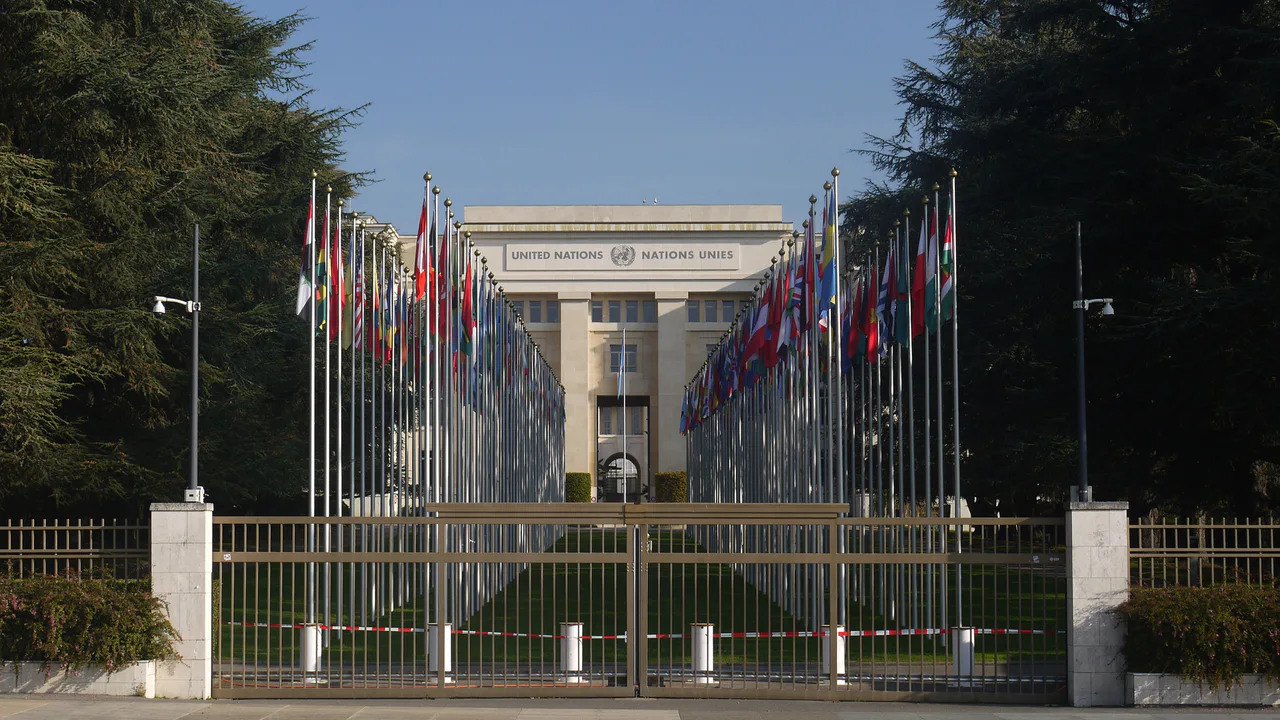
Zenus Bank made financial inclusion and gender equality part of its public strategy when it announced its commitment to the UN Principles for Responsible Banking on June 2, 2021. Five years later, the substance of that commitment can be examined through account activity, the people reached by its infrastructure and the targets it has set for the next reporting cycle.
The dates describe two different milestones. The company-issued announcement was published in June, while UNEP FI's signatory list records Zenus joining in February 2021. The framework gave the bank a structure for translating its cross-border proposition into priorities it would subsequently have to explain in public.
What signing the principles commits a bank to do
The UN Environment Programme Finance Initiative framework covers six connected responsibilities: aligning strategy with societal goals; analysing impacts and setting targets; working with customers; consulting stakeholders; embedding governance and culture; and reporting transparently. It applies across an institution rather than to a single account or card.
For a digital bank, that shifts the discussion from where a service can theoretically be offered to who can actually access and use it. Remote onboarding may remove the need to visit a branch, but cost, identity documents, internet access and confidence in the service still influence participation. A meaningful inclusion strategy needs to examine those barriers alongside commercial growth.
Zenus's original statement identified financial inclusion and gender equality as its focus. Its current responsible-banking page also emphasizes reducing inequalities. These are the bank's chosen areas of work. Signatory status is participation in a framework; it is not a UN endorsement of a product, a deposit guarantee or a certification that every intended social outcome has been achieved.
What the latest report measures
The 2026 report covers September 2025 to August 2026 and assesses services delivered through institutional and fintech partners. It examines end-users where data is available, a useful distinction when one partner can serve many customers.
Show data tableHide data table
| Indicator | Reported result | Meaning |
|---|---|---|
| Accounts held outside the United States | 93.5% | International share of reported accounts |
| Combined account portfolio | 128.3% annual growth | Expansion of accounts |
| Virtual accounts | 206.1% annual growth | Growth of this account category |
| Card accounts | 75.8% annual growth | Growth of this account category |
These are measures of reach and scale. They become more informative when combined with evidence of sustained use, affordability and the circumstances of the people using the service. An additional account may help someone receive international earnings, or it may be a supplementary account held by someone who already has access to banking. The account count alone cannot distinguish those situations.
The country mix adds another dimension to reach. Bangladesh and Pakistan accounted for smaller shares of the portfolio in the 2026 composition table, while the United States and Nigeria accounted for larger shares. A changing share describes the balance of the portfolio; it needs customer-level evidence before it can be read as a change in access for an underserved population.
Selected markets in the Zenus portfolio, 2025 and 2026
Portfolio shares show how the relative weight of selected markets changed.
%
Tap or hover for details. Select a series above to show or hide it.
Source
Selected markets are not a complete distribution. A change in portfolio share does not by itself measure growth in customer numbers or newly achieved financial inclusion.
Show data tableHide data table
| Category | 2025 | 2026 |
|---|---|---|
| Bangladesh | 21.60% | 19.48% |
| Pakistan | 17.99% | 15.50% |
| United States | 2.88% | 6.52% |
| Nigeria | 0.91% | 1.45% |
Growth and gender representation tell different stories
Women in Zenus individual end-users: results and targets
The report records a lower portfolio share, then sets a path toward higher representation.
%
Tap or hover for details. Select a series above to show or hide it.
Source
Women as a percentage of individual end-users. Targets are future commitments, not achieved results. The bank states that this reporting cycle has no independent external assurance.
Show data tableHide data table
| Category | Reported share | Future target |
|---|---|---|
| Previous reporting period | 15% | Not available |
| 2026 baseline | 12% | Not available |
| 2027 | Not available | 13% |
| 2028 | Not available | 15% |
| 2029 | Not available | 18% |
The report also records 52.3% growth in account openings among women. More openings and a smaller portfolio share can coexist when other groups expand faster. That distinction makes the disclosure useful: absolute growth answers whether activity increased, while representation asks whether women are participating proportionately as the business expands.
Zenus sets women's participation targets of 13% in 2027, 15% in 2028 and 18% in 2029. These are future targets. The report states that this cycle has no independent external assurance, so the figures remain management-reported data.
The wider inclusion problem remains larger than account availability
The World Bank's analysis of Global Findex 2025 provides an independent view of the challenge. Using 2024 survey data, it found that 73% of women in low- and middle-income economies had a financial account, compared with 66% in 2021. About 700 million women worldwide still lacked one. It also reported that 36% of women in those economies saved formally and 58% made or received digital payments.
Account ownership is the access measure: it asks whether women have a financial account in the first place. The World Bank observations show progress across low- and middle-income economies, establishing the broad inclusion problem against which an individual bank chooses its priorities.
More women in LMICs have a financial account
Global Findex 2025 reports a seven-percentage-point increase between its 2021 and 2024 observations.
%
Tap or hover for details. All values are also available in the data table.
Source
Women in low- and middle-income economies. This population measure is separate from the share of Zenus customers who are women.
Show data tableHide data table
| Category | Women with an account |
|---|---|
| 2021 | 66% |
| 2024 | 73% |
Formal saving asks what an account enables
The same Findex analysis records a larger increase in formal saving than in account ownership. Saving through a financial account is a distinct use of access: it gives a customer a way to retain funds for later rather than relying only on cash or another person to hold them.
Formal saving among women in LMICs
The share saving formally rose from 22% to 36%, an outcome beyond simply owning an account.
%
Tap or hover for details. All values are also available in the data table.
Source
Share of women in low- and middle-income economies. The figures describe the wider inclusion challenge, not outcomes attributable to Zenus.
Show data tableHide data table
| Category | Women saving formally |
|---|---|
| 2021 | 22% |
| 2024 | 36% |
Digital payments show a different form of everyday use
Receiving wages or another payment can create a reason to open an account, while paying a merchant makes the account useful in daily commerce. Findex reports both a broad measure of making or receiving digital payments and the narrower measure of paying merchants digitally. They illuminate different steps from access to use.
Digital payment use grew alongside account access
Digital payments include making or receiving payments; merchant payments are a more specific use.
%
Tap or hover for details. Select a series above to show or hide it.
Source
Women in low- and middle-income economies. The measures overlap and must not be added together.
Show data tableHide data table
| Category | Made or received digital payments | Made digital merchant payments |
|---|---|---|
| 2021 | 50% | 32% |
| 2024 | 58% | 38% |
Those figures measure different populations from Zenus's customer mix and cannot serve as a direct performance comparison. Their value is conceptual: ownership, active use and financial resilience are related but separate questions. A bank can increase the number of people reached while still needing to understand whether accounts help customers manage irregular income, pay suppliers or withstand an unexpected expense.
A different delivery model for the same inclusion question
Zenus's July 2025 strategy announcement scheduled the discontinuation of its dedicated retail platform for October 22, 2025 and placed greater emphasis on infrastructure for fintechs and institutions. The shift moved more of the end-customer experience into partner businesses. Our report on that transition explains the commercial change.
That makes the quality of partner-level reporting central to the inclusion agenda. A regulated account and payment connection supply the underlying capability; the partner's onboarding, pricing, language support and customer service help determine who benefits from it. The strongest way to follow the 2021 commitment is therefore to read the reporting record as a sequence: what access expanded, who participated, how services were used and which gaps the next targets are intended to address.
In this article

Oliver Reed
Oliver Reed covers industry acquisitions, investment and market research for Gift Card News.