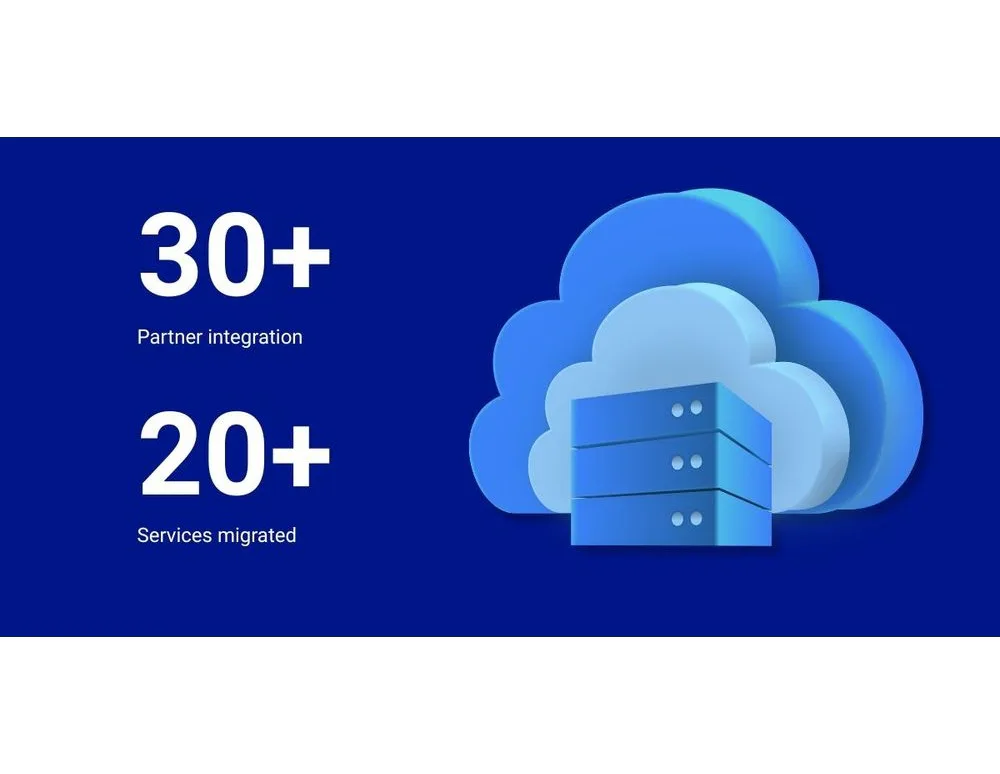
Cryptorefills disclosed a four-week migration of its gift-card payment infrastructure on February 19, 2026. The company moved more than 20 services to a new Amazon Web Services account, with temporary disruption to search and some payment methods. [S01]
For a business selling digitally delivered value, the consequences of an infrastructure change extend beyond website availability. A customer can reach the storefront while a payment processor or gift-card supplier remains unreachable. Completing the purchase requires those connections and the order record to agree.
Why the platform had to move
Author Simonluca Landi attributed the early-2026 move to internal organisational decisions. The team also used it to replace ageing infrastructure, adopting Amazon EKS and defining its configuration in code. [S01]
Cryptorefills has operated since 2018 under Amsterdam-based Big Dream Ventures B.V. It sits between holders of cryptocurrency and suppliers of gift cards and other digital products. Its service is therefore both a retail storefront and an integration business. [S02]
The commercial reason to invest in reliability is straightforward: a failed connection can prevent a sale even when there is a willing buyer and available card inventory. Reconstructing infrastructure can also reduce dependence on undocumented knowledge held by individual engineers. These are operational incentives, not a claim that the project produced a measured profit increase.
A supplier network cannot move on command
The account describes more than 30 partner connections and delays obtaining approval for new network addresses. Cryptorefills reported brief payment-method interruptions but said no customer payments were lost or corrupted. [S01]
That distinction is material. Keeping an existing transaction intact is different from keeping every checkout option continuously available. The account is a company report about its own operations, not an independent service-quality audit.
Cryptorefills' current brand offering illustrates the dependency: suppliers can connect directly or provide managed inventory, while the platform handles consumer purchases and offers settlement to brands. The ability to distribute a card depends on more than the appearance of that card in the catalogue. [S03]
Resilience comes with operating costs
One deliberate compromise remained a single outbound network gateway. [S01] AWS documentation explains that a gateway is redundant within its own availability zone, but an outage of that zone can also cut internet access for systems elsewhere that depend on it. Separate gateways improve that resilience. [S04]
For a distributor connecting to many external suppliers, there is a balance between simpler approved network addresses and reducing concentration risk. More infrastructure can remove one dependency while adding cost and operational complexity.
Amazon's current EKS pricing charges for the cluster separately from resources such as computing capacity, storage and network addresses. A managed platform therefore transfers some operating work to a cloud provider; it does not make the underlying resources free. These published charges do not reveal Cryptorefills' actual bill. [S05]
The useful business outcome to assess is whether fewer operational dependencies translate into more dependable fulfilment. Cryptorefills has described the work and its interruptions, but has not published a before-and-after cost or availability comparison. The disclosure is most informative about the difficulty of moving a live gift-card business without losing control of payments and delivery.
In this article

Suzie Elis
Suzie Elis covers gift card products, digital gifting and distribution for Gift Card News.