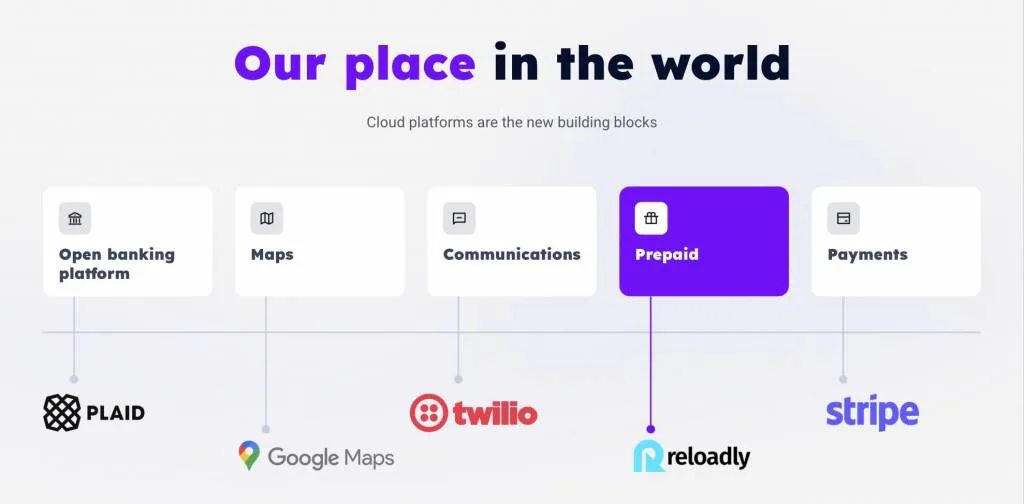
Reloadly is reshaping its commercial identity around prepaid rewards after finding that the customers buying those products differed from its original mobile top-up users. In a March 22 account of the shift, founder Michel Francis said he had returned to running the business after three years as an adviser and board member. [S01][S02]
The important decision is where the company intends to compete. A business known for telecom top-ups is seeking a broader place in organisations’ reward and payout budgets, where the buyer may be an employer, a platform or an incentive programme.
A wider role for distribution infrastructure
Reloadly’s earlier company reporting described mobile-operator relationships and developer access as essential parts of its top-up business. Its September 2019 account already discussed ambitions beyond airtime, including gift vouchers. That history puts the present repositioning in perspective: expanding the forms of value it distributes has been a longstanding direction. [S02]
The commercial connection is the ability to aggregate access. A customer wants to reach recipients without negotiating individually with every underlying supplier. The infrastructure provider can handle more of that customer's activity if it offers several relevant products through a usable operating process.
But a wider catalogue also changes the work. Different products bring different recipient expectations, funding conditions and support responsibilities. Success in one distribution category is useful experience, not proof that the company has already solved those requirements in every adjacent market.
The buyer changes the sales proposition
Francis presented the new website and positioning as a response to the audience now coming to Reloadly. He placed gift cards, payout links and prepaid cards within that broader strategy. [S01]
That is a commercially meaningful choice even without a disclosed acquisition or funding round. It changes the problem the company presents itself as solving, from access to one type of service to the delivery of rewards across several formats.
For an existing client, the potential benefit is fewer separate vendor connections. For Reloadly, it is a chance to serve a larger share of that client's recurring activity. Neither implies that every product has the same margin or that consolidation necessarily lowers the buyer's total cost.
Delivery choice still has operating boundaries
Reloadly's current homepage lets a payout-link recipient choose among available reward formats and describes usage-based pricing. These current product materials show how the wider positioning is expressed today; they do not establish that every displayed capability launched in March. [S03]
Choice shifts part of the selection decision away from the organisation funding the reward. That can reduce the need to predict an individual's preferred merchant, while giving the distributor responsibility for the choices presented and their usability.
The March account provides no product-level revenue, margin comparison or independently verified customer outcome. It therefore supports a report about strategic direction, rather than a conclusion that the pivot has already improved profitability. The relevant commercial measure will be whether the expanded offer wins repeat business while delivering value recipients can actually use.
In this article

Daniel Brooks
Daniel Brooks covers payment networks, financial technology, payment security, gift card fraud and PCI DSS for Gift Card News.