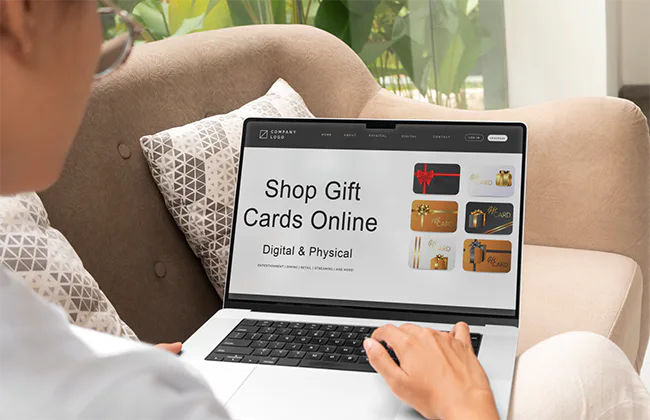
InComm Payments' latest shopper study makes a commercial argument for improving both the gift-card rack and the online alternative when a brand is missing. Released on March 23, 2026, its 2025 Gift Card Year in Review reports stronger spontaneous buying and increased digital purchasing among surveyed gift-card shoppers. [S01]
The findings come from quarterly surveys covering more than 6,500 people who had bought a gift card within the previous 90 days. Respondents were not confined to InComm's own distribution channels. The observations concern 2025 behaviour; the report's release in 2026 does not make them 2026 market results. [S01]
Four signals for gift-card distributors
Show data tableHide data table
| Reported measure | Year-over-year change |
|---|---|
| Spontaneous gift-card purchases overall | Up 14% |
| Respondents selecting digital gift cards | Up 14% |
| Average number of digital cards purchased | Up 23.5% |
| Intent to buy gaming gift cards | Up 86% |
These are different survey measures, not a common measure of sales growth. The increases are relative changes, not percentage-point gains or estimates of total market revenue. The published summary does not provide enough sampling detail to establish that every retailer would experience the same pattern. [S01]
Growth in reported spontaneous gift-card purchasing
Relative change in 2025 versus 2024, by card-shopper type.
percent relative change
Tap or hover for details. All values are also available in the data table.
Source
The first bar uses 30 only as the displayed reference for the source phrase almost 30%; no exact closed-loop estimate is published. Shopper-type bases differ and counts are undisclosed. These are survey-reported changes, not sales revenue or percentage-point increases.
Show data tableHide data table
| Category | Reported value |
|---|---|
| Closed-loop: almost 30% | 30 percent relative change |
| Open-loop: 7% | 7 percent relative change |
Why InComm is interested in the answer
InComm sits between gift-card brands, retailers and purchasers. It supplies physical and digital products and supports programmes across store, mobile and online channels. Its services include helping merchants sell other companies' cards and distributing a brand's own cards through retail partners. [S02]
That position gives it a commercial interest in both sides of the study. Better in-store presentation can support the retail channel; a working online alternative can keep a customer looking for a specific brand inside the distribution network. The report is supplier research tied to those services, not an independent valuation of the market.
InComm's retail offering includes displays, packaging, promotional services, reporting and an e-commerce service through which retailers can offer card ordering and delivery. Research into shopping behaviour helps the company make the case for those products as well as advise existing programme clients. [S03]
The category findings give that supplier interest a concrete focus. The reported proportion of shoppers choosing gaming brands increased 110%, streaming 100% and delivery services 67% in 2025. Those changes can inform the range a programme supplier offers, but they are not measurements of InComm revenue or proof that a particular display generated sales. [S01][S03]
Growth in reported selection of at-home brand categories
Relative changes in the proportion of shoppers selecting each category.
percent relative change
Tap or hover for details. All values are also available in the data table.
Source
Categories can overlap; changes must not be added. This is category-selection reporting, separate from the 86% gaming purchase-intent result. It is not card face value, audited transactions, supplier revenue or profit.
Show data tableHide data table
| Category | Reported value |
|---|---|
| Gaming | 110 percent relative change |
| Streaming services | 100 percent relative change |
| Delivery services | 67 percent relative change |
The business decision is about availability
Our reading is that the findings shift attention from simply adding more brands to making the desired brand easy to find and buy. A display that attracts attention but lacks stock can lose the transaction. A broad online catalogue is useful only if the shopper can reach it, complete payment and receive a valid card.
For the retailer, this is a channel and inventory decision. Physical stock occupies space and needs replenishment; digital delivery changes the fulfilment problem rather than eliminating it. For the issuing brand, wider distribution can bring prepaid spending commitments from customers who did not visit its own website.
InComm's programme services include coordinating card production, direct-to-store replenishment and merchandising informed by sales data. Those activities explain why the company can benefit commercially from retailers investing in availability. The report does not disclose the margins, partner commissions or additional contracts generated by its recommendations. [S04]
Growth in reported online routes after an unavailable card
Changes among closed-loop shoppers reporting each destination.
percent relative change
Tap or hover for details. All values are also available in the data table.
Source
Relative change in reported use of each route, not its absolute market share, conversion rate or an exclusive destination split. Exact underlying shopper counts and question bases are not supplied.
Show data tableHide data table
| Category | Reported value |
|---|---|
| Gift-card sales websites | 74 percent relative change |
| Brick-and-mortar retailer websites | 37 percent relative change |
Growth in interest still needs profitable conversion
A rise in gaming purchase intent is useful for range planning, but intent is not a completed purchase. Likewise, a customer choosing digital delivery does not by itself establish a lower cost of service. Processing, support, promotion and fraud costs still affect the return.
The next evidence would be realised sales by format, stock availability, repeat purchases and contribution after programme costs. The study provides reasons to revisit assortment and distribution. It does not establish how much profit a retailer or InComm will gain by doing so.
Growth in stated gaming gift-card purchase intent
2025 versus 2024 intentions, using two nested shopper scopes.
percent relative change
Tap or hover for details. All values are also available in the data table.
Source
The source says self-use intent doubled, equivalent to 100% relative growth. Self-use shoppers are within the broader population; these are not independent groups. Intent is not completed transactions, margin or retailer profit.
Show data tableHide data table
| Category | Reported value |
|---|---|
| All gift-card shoppers | 86 percent relative change |
| Self-use gift-card shoppers | 100 percent relative change |
In this article

Oliver Reed
Oliver Reed covers industry acquisitions, investment and market research for Gift Card News.