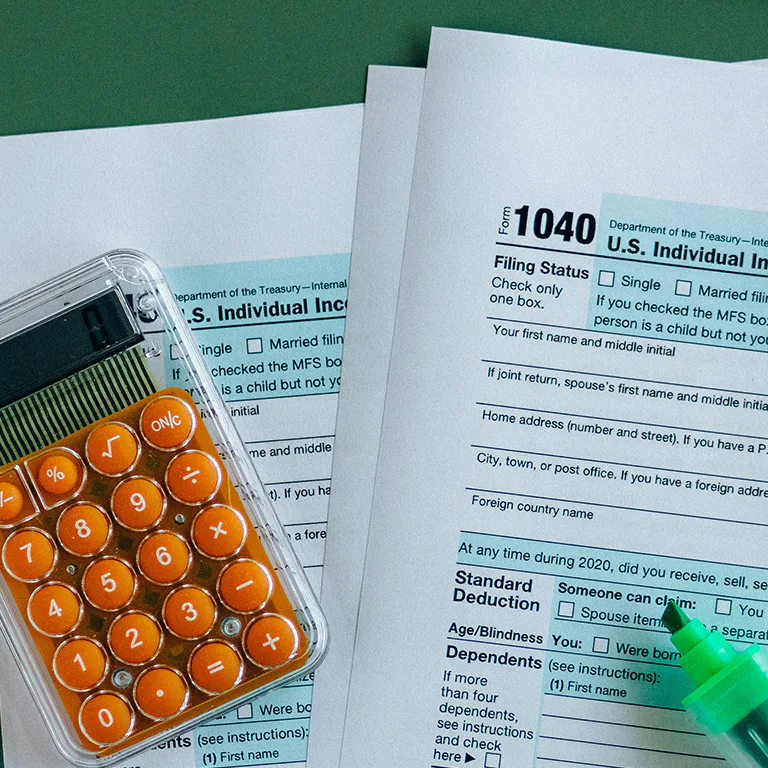
The First National Bank in Sioux Falls has outlined tax changes affecting family wealth, employee income and business administration under the One Big Beautiful Bill Act. Its July 17, 2025 overview follows the law’s enactment on July 4 and separates provisions beginning in 2025 from changes scheduled for 2026.
Gift, estate and charitable giving provisions
The law sets the federal basic gift and estate exclusion at $15 million per taxpayer for 2026, with inflation adjustments thereafter. The IRS gift-tax guidance confirms the change. This is the basic lifetime exclusion used in gift and estate taxation, rather than an annual allowance for each recipient.
Beginning in 2026, eligible nonitemizers can deduct certain cash charitable contributions up to $1,000, or $2,000 on a joint return. For people who itemize, the law introduces a charitable deduction floor of 0.5% of adjusted gross income. Those changes affect different filing situations and should not be treated as the same deduction.
Individual deductions and earned income
The legislation makes the Tax Cuts and Jobs Act individual rate structure permanent. For tax year 2025, it raises the standard deduction to $15,750 for single filers and $31,500 for joint filers, with inflation adjustments in later years.
The state and local tax deduction cap rises to $40,000 in 2025 for single and joint filers, subject to a phase-down beginning above $500,000 of modified adjusted gross income. Separate limits apply to married taxpayers filing separately. The enhanced cap grows by 1% annually through 2029 before reverting to $10,000 in 2030.
Four temporary deductions apply for 2025–2028. As described in IRS guidance for individuals and workers, eligible taxpayers may deduct up to $25,000 in qualified tips and up to $12,500 in qualified overtime compensation, or $25,000 for overtime on a joint return. The overtime provision concerns qualifying compensation above the regular rate, not every dollar earned during overtime hours. Both deductions begin phasing out above $150,000 of modified adjusted gross income, or $300,000 for joint filers.
A separate deduction of up to $6,000 per qualifying taxpayer aged 65 or older begins phasing out above $75,000 of modified adjusted gross income, or $150,000 for joint filers. Eligible interest on a qualifying loan for a new personal-use vehicle may be deductible up to $10,000 annually; the vehicle must meet U.S. final-assembly and other requirements. That deduction begins phasing out above $100,000, or $200,000 for joint filers. These provisions reduce taxable income subject to their conditions; they do not make all tips, overtime, retirement income or car payments free of every tax.
Children, employee benefits and education savings
The law creates Trump Accounts and a pilot program for a one-time $1,000 federal contribution for eligible U.S.-citizen children born in 2025–2028 with a valid Social Security number. The money is contributed to the child’s account, rather than being a general $1,000 deduction for opening one. IRS account guidance distinguishes the pilot contribution from the ordinary $5,000 annual contribution limit. Contributions cannot begin before July 4, 2026, and withdrawals generally cannot begin before the calendar year the beneficiary turns 18.
The maximum Child Tax Credit rises to $2,200 per qualifying child for 2025 and is indexed thereafter, with eligibility and income phaseouts still applying. Beginning in 2026, the dependent-care assistance exclusion rises to $7,500, or $3,750 for married taxpayers filing separately.
The legislation expands qualifying education expenses for section 529 plans, including specified postsecondary credentialing costs and additional K–12 expenses. The annual K–12 limit rises from $10,000 to $20,000 beginning in 2026, as reflected in IRS tuition-program guidance; it is a combined limit across the beneficiary’s plans, not a separate allowance for every account.
Business reporting and asset provisions
For qualifying business property acquired and placed in service after January 19, 2025, the law restores 100% first-year bonus depreciation. It also raises the reporting threshold for certain business payments covered by sections 6041 and 6041A from $600 to $2,000 for payments after December 31, 2025, with inflation adjustments after 2026. The change affects information reporting; it does not make income below that threshold tax-exempt.
A further provision allows an election to pay tax attributable to certain qualified farmland sales in four annual installments. The bank presents the changes as issues for taxpayers and their existing advisers to review together, because eligibility, effective dates and income thresholds vary across the provisions.
Sources and documents
Collapse
In this article

Emma Carter
Emma Carter covers retail, e-commerce and the gift card shopping experience for Gift Card News.