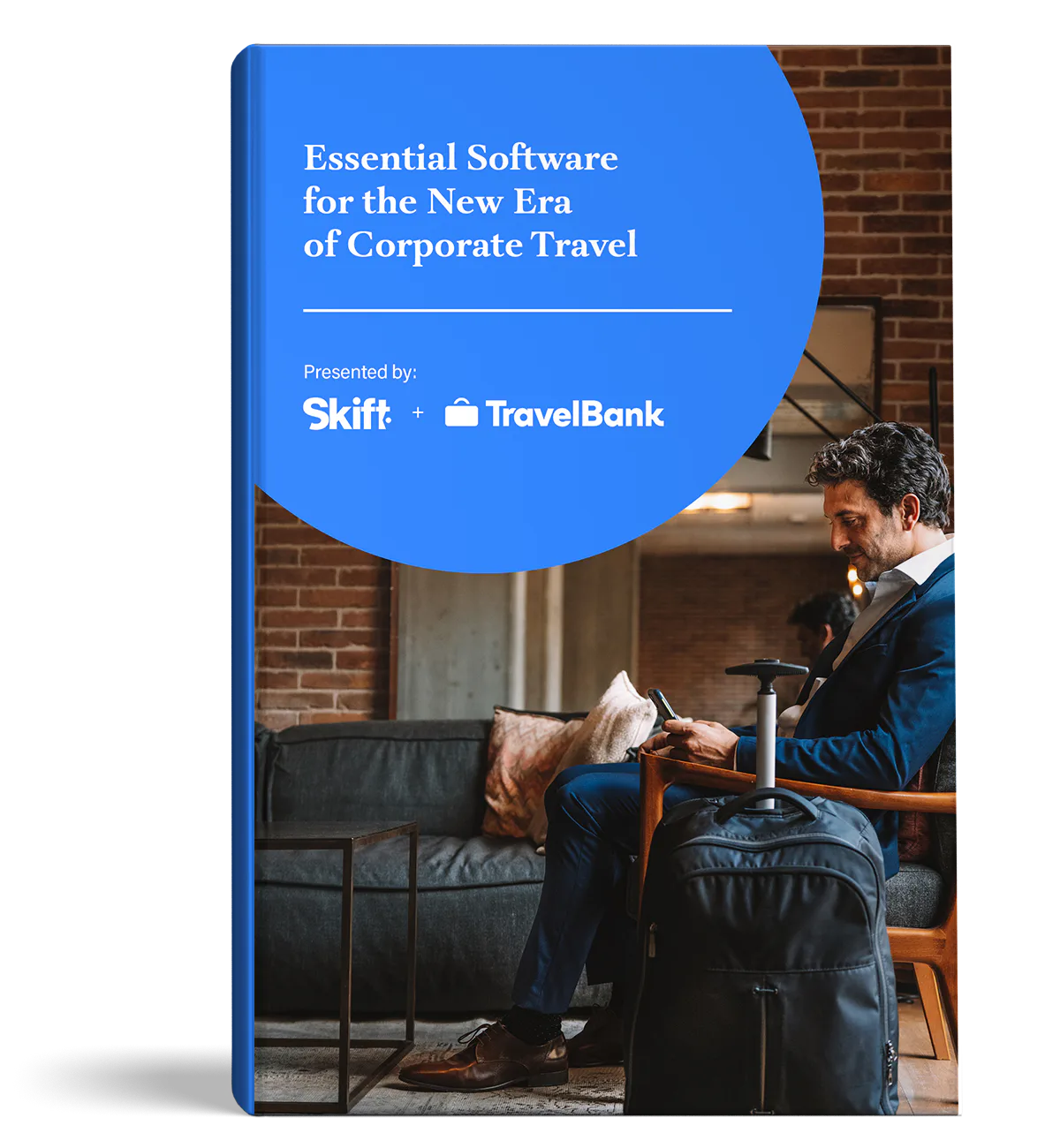
Employee rewards appeared alongside payment and expense tools in a Skift and TravelBank report released in May 2023. The research examined how travel and finance teams were changing their systems after the pandemic, treating employee experience and spending control as connected operational questions. [S01]
For gift card suppliers, one result stands out: 26% of respondents reported an employee rewards programme already in place, while 35% intended adoption within the following year. The study defined that category to include gift cards, prizes and other incentives tied to travel goals. It did not measure gift card adoption alone. [S02]
Adoption and intention are separate measures
Employee rewards and virtual cards in the February 2023 survey
Two selected categories from the report’s seven-category technology comparison.
%
Tap or hover for details. Select a series above to show or hide it.
640 respondents in the US and Canada. Selected response options, not a complete distribution. Plans reported in February 2023 are not verified later adoption.
Explore the data table
| Category | Already adopted | Planned within the following year |
|---|---|---|
| Employee rewards programmes | 26% | 35% |
| Virtual credit cards | 22% | 38% |
The chart should not be read as a forecast that came true. An intention to buy a system is a different stage from an approved budget, a signed contract or employees using it. Adding the two bars would overstate adoption at the time, and the report does not follow those organisations forward to establish which plans were completed.
Who answered the survey
Fieldwork took place in February 2023 among 640 corporate travel and finance professionals in the United States and Canada, spanning more than 20 sectors. Executive managers made up 35% of respondents, travel or finance leaders 31%, and other relevant decision-makers 34%. The report was produced by Skift with TravelBank. [S02]
This is a survey of decision-makers, rather than a count of all employers or an employee survey. Its percentages cannot establish the share of the entire workforce receiving incentives. The published methodology does not provide the country split or a weighting scheme that would support that extrapolation.
Where gift cards fit
A travel reward changes the proposition offered to the employee: meeting a defined policy goal can create a personal benefit. A payment tool has a different job, enabling or controlling the underlying business purchase. Both can be part of the same trip without being the same product.
That distinction matters when evaluating a programme. A company would need to specify which behaviour earns a reward, who qualifies, what the incentive costs and how savings are calculated. Booking a cheaper option is not automatically a net saving if the comparison ignores the reward, administration or a later booking change.
The research provides a historical indication of buyer interest. It does not show the amount loaded onto gift cards, the value ultimately redeemed or the financial return from an incentive programme. Those transaction and outcome measures would be needed to turn survey interest into an assessment of commercial performance.
Sources and documents
Collapse
- [S01] Original research publication and report overview — Skift
- [S02] Full report, methodology and technology adoption chart — Skift / TravelBank
In this article

Oliver Reed
Oliver Reed covers industry acquisitions, investment and market research for Gift Card News.