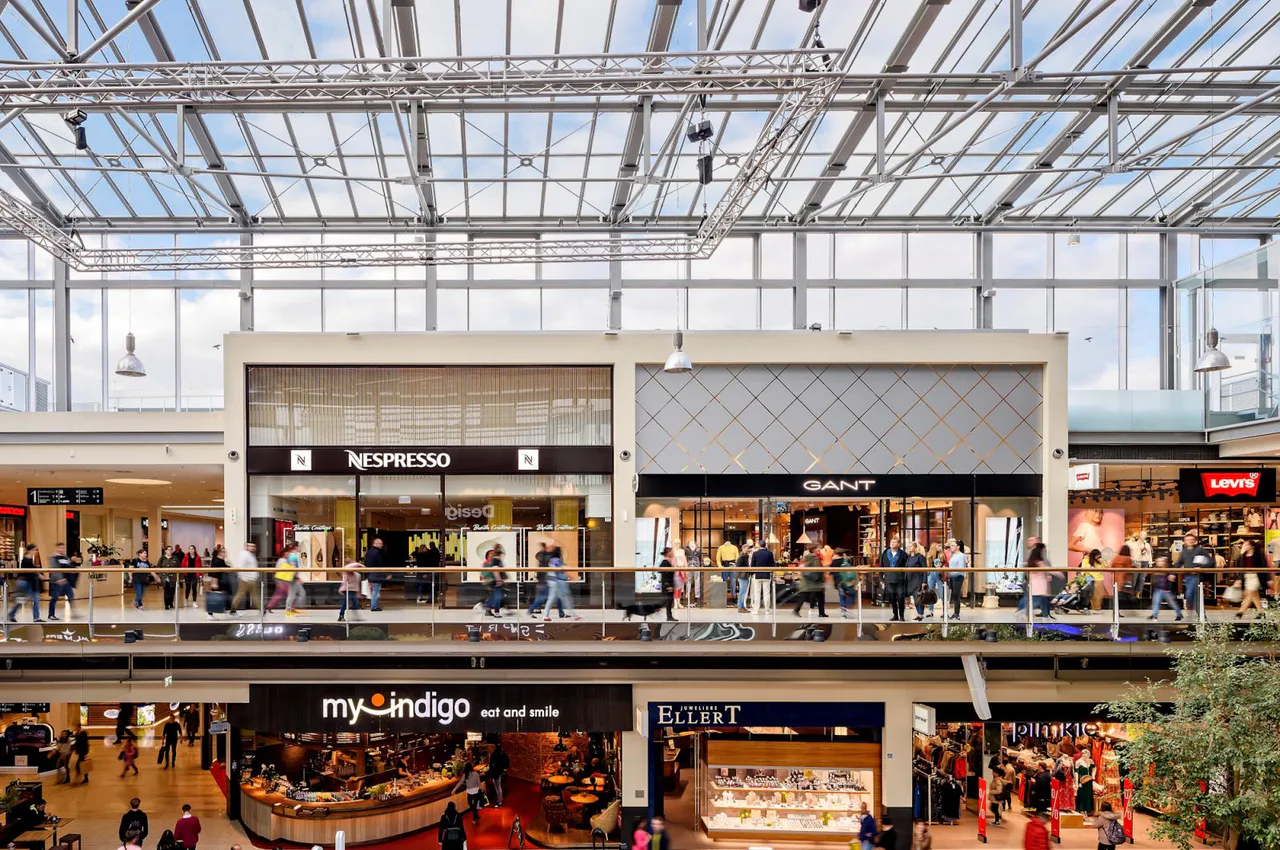
Westfield Donau Zentrum and Westfield Shopping City Süd introduced new Giftify-powered gift cards in early March 2026, extending the supplier's work with Unibail-Rodamco-Westfield into Austria. The two centres offer physical cards that can also be digitised for mobile use. Austria joins France, Spain, Poland, Czechia and the Netherlands in the rollout. [S06] [S02]
The change illustrates a practical tension in European gift card programmes: an operator can seek common technology and branding across its portfolio while still needing different redemption boundaries in individual markets. Austria's new cards are tied to their respective shopping centres.
Load value and the shared supplier framework
Giftify specialises in multi-retailer gift card systems for shopping centres, combining physical and digital distribution with processing and programme reporting. Its customer is the centre or property group managing the scheme, rather than an individual shop simply issuing its own voucher. [S03]
Unibail-Rodamco-Westfield, or URW, owns and operates retail destinations. Its Vienna portfolio includes Donau Zentrum in the Donaustadt district, which the company describes as having more than 220 stores. Shopping City Süd serves the wider Vienna region from Vösendorf. A centre gift card can direct a single recipient's spending towards several participating tenants while retaining the destination's brand. [S04] [S05]
The current Shopping City Süd shop offers physical and digital cards and a custom amount within €10–€250, alongside €50, €100 and €150 preset choices. Its use terms identify Giftify as issuer and set the same initial-load boundaries. Those limits describe the actual product, rather than a claim about average spending or programme sales. [S07] [S08]
Shopping City Süd card load boundaries
Current centre, shop and issuer terms agree on the available range.
EUR
Tap or hover for details. All values are also available in the data table.
Source
These are lower and upper product boundaries, not two fixed denominations or observed purchases. The actual shop also offers €50, €100 and €150 presets plus a custom value. The card cannot be reloaded and is restricted to participating merchants in its named centre.
Show data tableHide data table
| Category | Published face-value boundary |
|---|---|
| Minimum initial load | 10 EUR |
| Maximum initial load | 250 EUR |
Giftify's account of the wider relationship describes fragmented providers and differing national arrangements as problems URW wanted to address. It says the group selected Giftify through a competitive tender and adopted a central framework for local deployments. That is background to Austria's rollout, not evidence that the overall agreement was first signed in March. [S06]
The same case study quotes Geoffroy Level, URW's senior customer experience and services manager for Europe, describing the objective as to "standardise across countries without losing local adaptability". The Austrian redemption boundary shows why that second part matters. [S06]
Validity, local acceptance and the commercial trade-off
Westfield's explanation for limiting each new card to one centre cites an Austrian Supreme Court decision concerning the classification of cards usable at two geographically separate centres. The operator says avoiding the additional administration and costs associated with electronic money allows it to keep the scheme free for customers. This is Westfield's account of its design choice, not an independent legal conclusion about other programmes. [S02]
The court background predates the rollout. In its 25 April 2023 decision, OGH 4 Ob 207/22b rejected the limited-network argument for the challenged shared-centre product and upheld the challenge to its redemption and holding-fee clauses. That case explains relevant constraints on the earlier design; it does not constitute a court assessment of the new Giftify card. [S09]
Published card-use windows across the Austrian transition
Westfield distinguishes earlier dual-centre cards from the new centre-specific programme.
years
Tap or hover for details. All values are also available in the data table.
Sources
These are published product-use windows, not limitation periods or a conclusion that unused money lawfully disappears. Westfield provides a refund route for legacy balances. The current issuer terms distinguish the five-year use period from possible later claims, while the 2023 court rejected the challenged old fee clauses. No calendar interval has been calculated.
Show data tableHide data table
| Category | Published initial card-use window |
|---|---|
| Earlier dual-centre cards, operator description | 1 years |
| New centre-specific cards from March 2026 | 5 years |
The current Shopping City Süd information gives these conditions for the new programme, separately from the older cards discussed on the same page.
Show data tableHide data table
| Feature | Published condition |
|---|---|
| Purchase | Centre reception or online |
| Load value | EUR 10 to EUR 250 |
| Reloading | Not supported |
| Validity | Five years from purchase in issuer terms |
| Redemption | Participating businesses in the named centre |
Westfield also warns that some merchants may not accept the new cards immediately during the technical transition. The size of a centre's tenant roster therefore should not be treated as a confirmed card-acceptance count. [S02]
The currently linked issuer document confirms five years from purchase, matching the new programme’s advertised five-year window. It also distinguishes this initial use period from possible later claims. Earlier cards and unused balances follow the legacy arrangements described on Westfield’s page, including its refund route; the chart does not equate a printed card expiry with lawful loss of the balance. [S02] [S07]
There is a narrower unresolved difference in the current public guidance. Westfield says lost cards cannot be replaced, while Giftify’s clause 11.6 allows a replacement request after reporting the loss and proving the original load payment, with a €10 fee in its summary box. That conditional process should not be presented as an unconditional replacement guarantee. [S02] [S07]
For Giftify, expanding an existing property-group relationship into another country creates an opportunity to reuse its operating platform across more locations. Winning a group framework can make subsequent local deployments less dependent on separate supplier selections. The announcement does not disclose fees, commissions or the value of the Austrian contract.
For URW, common processes and reporting can reduce duplicated work across its centres. The commercial benefit of a centre card also depends on bringing spend to participating tenants. Card sales alone would not demonstrate additional tenant revenue: some recipients might have shopped there anyway, and some balances may remain unused.
The narrower Austrian acceptance area makes customer communication particularly important. A shared Westfield identity could encourage a shopper to assume the card works at both nearby centres. Clear centre names, terms and merchant acceptance information are therefore part of the programme's commercial operation, not merely administrative detail.
Giftify describes the wider relationship as a way to improve sales and customer experience. Those remain objectives rather than independently measured Austrian results. The milestone is a confirmed local deployment within a broader supplier relationship; its performance will depend on adoption, acceptance and actual spending after redemption.
This article is journalistic reporting and does not constitute legal advice.
In this article

Suzie Elis
Suzie Elis covers gift card products, digital gifting and distribution for Gift Card News.