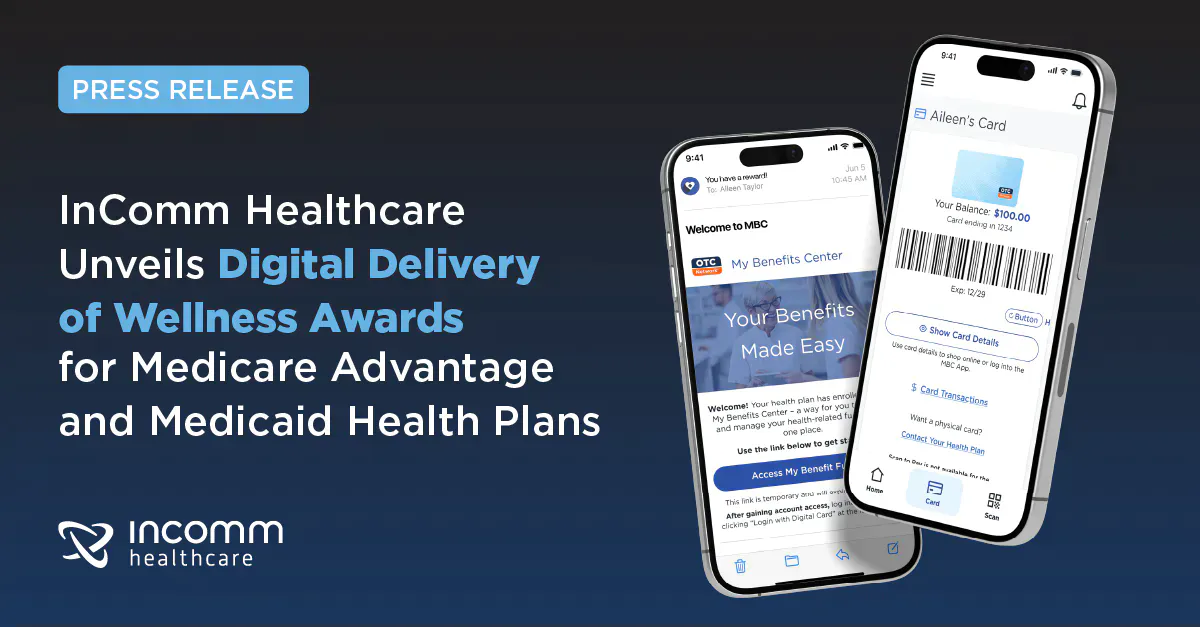
InComm Healthcare plans to deliver wellness rewards digitally to Medicare Advantage and Medicaid members from January 2027, replacing the wait for a mailed prepaid card with access through email, text or a health plan’s app. Announced on June 23, 2026, the feature concerns restricted-spend funds awarded after eligible activities, such as preventive screenings. [S01]
The change is in delivery, not a promise of unrestricted cash. A member receives value that remains governed by the health plan’s programme and the eligible products at participating retailers.
A payment network built around benefit rules
InComm Healthcare is a division of InComm Payments. Its existing business combines payment processing with controls over how plan-sponsored benefits can be spent. The division’s product portfolio brings multiple benefit categories onto one card, connecting plan administration with purchases at the point of sale. [S02]
Its OTC Network recruits retailers to accept benefit cards for approved goods. The network is therefore part of the product: a balance is useful to a member only where the merchant can process it and the item qualifies. InComm’s retailer materials describe that acceptance relationship as access to customers with funded benefits, rather than an ordinary retailer gift-card programme. [S03]
This infrastructure explains why a health plan might buy a specialist service instead of mailing a conventional gift card. The plan needs to distribute value, connect it to permitted uses and account for what happened afterwards. A familiar retail brand alone does not supply those controls.
The proposed gain for plans and members
InComm says faster recognition responds to member preference. In its survey of more than 500 Medicaid members, 56% preferred email or text delivery over a physical card by post. The company also identifies tracking and reclaiming unspent rewards as potential operational benefits. [S01]
For a plan, the intended economic link runs from a funded incentive to completion of an eligible activity. Shortening the delay may make that link more visible to members. However, a delivery preference is not evidence that the new service has improved health outcomes or reduced claims expenditure.
For InComm, digital distribution adds functionality to an existing plan relationship and acceptance network. For retailers, rewards become another source of eligible spending. Neither effect establishes new revenue until members use the service; programme funding, processing and support costs also remain part of the economics.
Digital access still needs a usable redemption route
InComm’s existing Medicare product documentation describes multiple benefit balances and automated recognition of eligible purchases. That restriction remains important when the delivery mechanism changes. An email can arrive immediately while a member still needs access to the message, a participating merchant and a qualifying purchase. [S04]
The planned rollout should therefore be judged on both speed and successful use. Removing postage can shorten one step, but it does not eliminate the need for member support or programme-specific eligibility rules.
The June announcement sets out a January 2027 launch plan, not completed performance results. It illustrates prepaid reward infrastructure moving toward digital delivery while retaining controls designed for the payer’s purpose.
In this article

Oliver Reed
Oliver Reed covers industry acquisitions, investment and market research for Gift Card News.