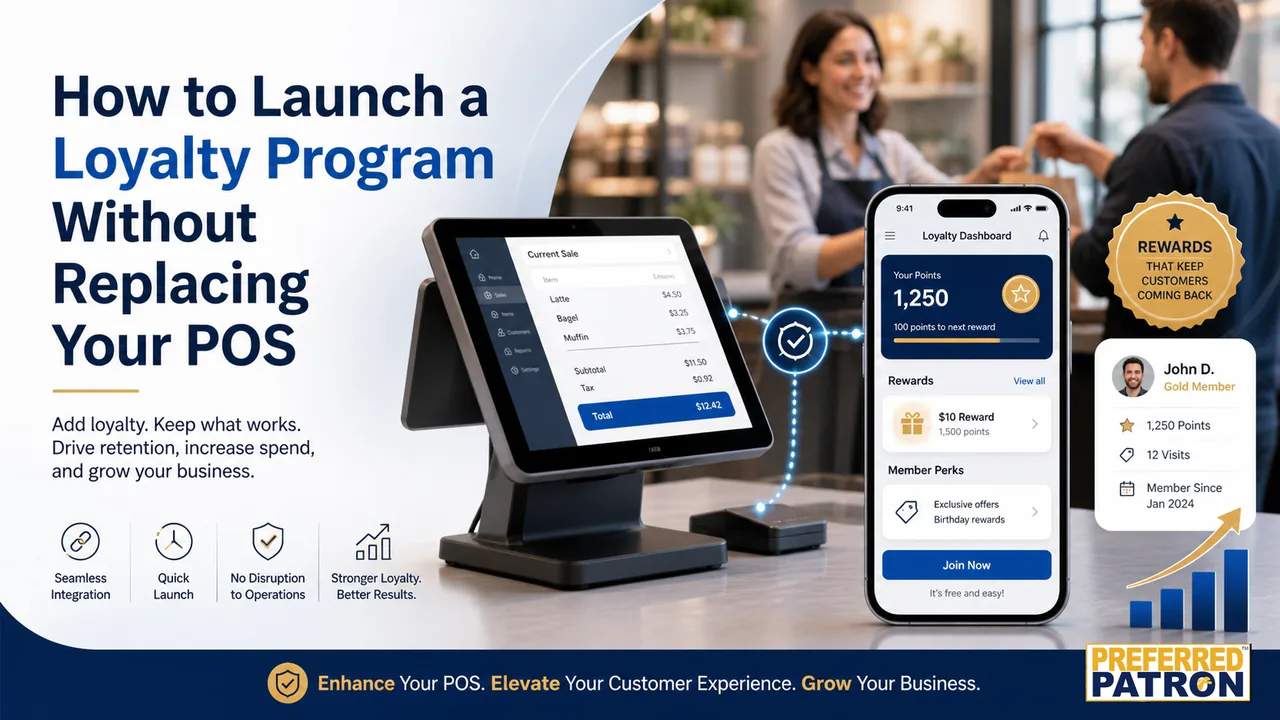
Preferred Patron is using an existing merchant concern, disruption at checkout, to sell a broader loyalty and gift card system. In a May 5, 2026 publication, the company argued that businesses could add rewards and customer communications while keeping the point-of-sale system that already processes their sales. [S01]
The approach removes a potentially expensive dependency from the buying decision. A merchant need not justify replacing checkout hardware before considering a gift card program. It also leaves an operational question unresolved until implementation: how the payment record and the loyalty record stay aligned.
A subscription built around the customer relationship
Preferred Patron provides retention software rather than a replacement payment terminal. Its company profile says it has been responding to customer needs since 2004 and describes tools for independents, franchises and enterprise groups. [S02]
The May article puts points, digital stamps, gift cards, automated messages and reporting within a staged rollout. It recommends adding complexity after staff are comfortable with the initial workflow, and measuring subsequent visits and reward use as well as member registrations. [S01]
Current pricing lists Small Business from US$29 monthly without setup fees or a long-term contract. Growth starts at US$199 monthly under an annual agreement, with US$500 setup. These differences undermine an unqualified no-contract, no-setup promise. [S03]
Keeping the POS does not remove implementation
The provider's FAQ describes standalone operation, direct connections, scheduled imports and real-time APIs as alternatives. Onboarding can include customer and balance imports, program rules, communications setup and training for the relevant staff. It says migration of an existing gift card program depends on being able to export the underlying data. [S04]
Those details explain the actual commercial work behind a low-disruption pitch. Keeping hardware can avoid one project while creating another: reconciling existing customer entitlements with a new system. An outstanding gift balance must remain spendable even if the merchant changes its marketing technology.
Staff time is also part of the economics. A second lookup or manual entry can become significant when repeated across a busy store. Integration may reduce those steps, but the price of building and maintaining it has to be weighed against that saving.
Why the provider benefits from a staged sale
For Preferred Patron, starting alongside an established POS broadens the pool of merchants it can approach. The vendor does not need a customer to be dissatisfied with checkout itself; it needs the business to see a gap in its gift card, loyalty or follow-up activity.
A merchant that starts with one function may later use more of the platform. That creates an opportunity for additional capacity or services, although the May publication reports neither conversion rates between plans nor revenue generated by such expansion.
The merchant's case is different. Signups are only a record of entry into the scheme. The economic benefit depends on later purchases, the cost of rewards and the time spent running the system. A well-attended launch could still subsidize customers who were already returning.
That makes the company's staged approach a proposition about managing adoption risk. The publication supports keeping a functioning POS while evaluating customer tools; it does not demonstrate that avoiding hardware replacement makes every loyalty deployment inexpensive or profitable.
In this article

Daniel Brooks
Daniel Brooks covers payment networks, financial technology, payment security, gift card fraud and PCI DSS for Gift Card News.