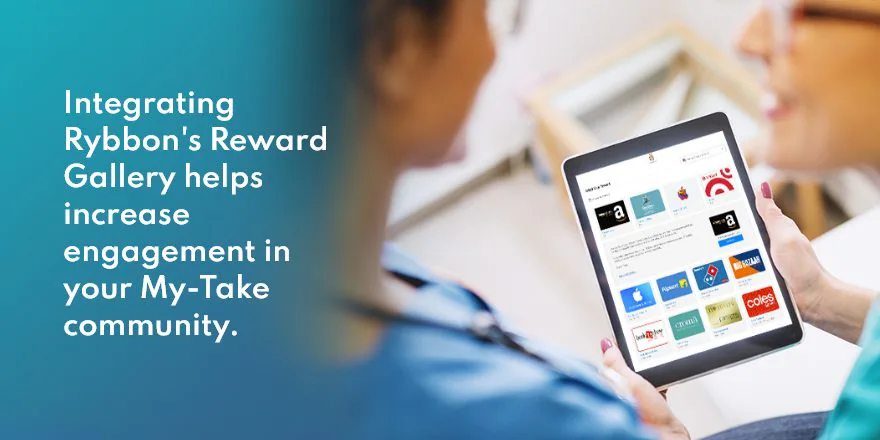
Rybbon and My-Take integrated points-based incentives into online research communities, allowing participants to redeem digital rewards without a separate manual fulfilment process. Announced on November 29, 2021, the connection brought Rybbon’s PointsJoy and Reward Gallery into My-Take’s community platform. [S01]
Keeping participation and redemption together
The integration linked completed activities to points and then to a catalogue of incentives. Participants could browse the Reward Gallery while signed in to their community, choose an available reward and have its points value deducted from their balance. The announcement listed digital gift cards, virtual Visa and Mastercard prepaid cards, PayPal and charitable donations among the options. [S01]
| Administrator control | What it changes |
|---|---|
| Points conversion | Sets the relationship between points and reward value |
| Reward catalogue | Limits or expands the choices shown to participants |
| Country-based selection | Presents rewards available in the participant’s location |
| Automatic delivery | Reduces manual reward distribution after the relevant threshold |
Administrators could choose the conversion rate and tailor the catalogue to different audiences. Rybbon also described automatic delivery when members reached a points threshold. These controls address separate parts of the same process: what a participant earns, what that balance can buy and how the reward reaches them. [S01]
The operational case for an embedded catalogue
For a research community, incentives involve more than purchasing gift cards. Someone must connect participation records with the correct points balance and avoid asking members to repeat information across disconnected systems. Moving redemption into the existing community can remove one administrative handoff.
The commercial promise was faster community administration and better engagement. The announcement did not quantify either outcome or provide a controlled comparison. It establishes the integration and its workflow, rather than a measured improvement in response quality.
That distinction matters when assessing research rewards. A convenient redemption experience can make participation less cumbersome, but it does not establish whether the resulting sample represents a wider population. Recruitment, question design and the treatment of repeat respondents remain separate parts of research quality.
Sources and documents
Collapse
- [S01] Rybbon and My-Take Simplify Insights Communities, Get Results Faster — www.bhnrewards.com
In this article

Suzie Elis
Suzie Elis covers gift card products, digital gifting and distribution for Gift Card News.