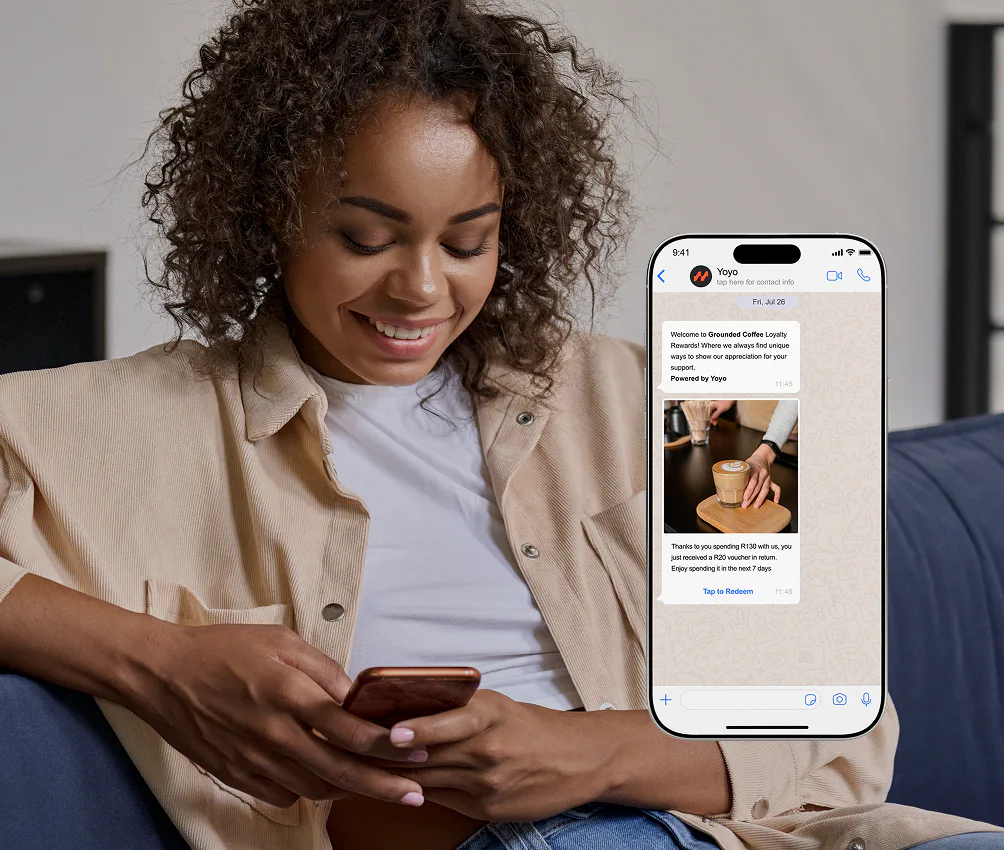
Yoyo is presenting WhatsApp as a delivery channel for South African retailers' gift card and loyalty rewards, bringing the incentive into a familiar conversation instead of asking customers to open another retail app. Its June 19, 2026 publication connects that proposition to purchase-triggered messages and redemption at checkout. [S01]
The attraction is access to attention. A reward that a customer notices has a chance to influence a later visit. But a message containing value is only one part of a transaction: the programme still needs to know who earned the reward and whether it remains spendable.
The messaging channel does not hold the business together
Yoyo supplies the reward infrastructure behind that experience. Its publication separates the messaging service, the loyalty engine that records eligibility and balances, and the integration connecting the two. Triggers can include spending milestones or other qualifying actions; card-linked payment is one option, not a requirement for every programme. [S01]
That division explains the company's commercial interest. A retailer can adopt a familiar communication channel while still needing a specialist to connect its customer records with reward issuance and merchant redemption. The visible chat is a route to the customer; the less visible integration is the service being sold.
For a merchant, the potential gain is fewer steps between earning a reward and discovering it. The June article supplies no controlled comparison establishing an increase in sales, basket size or profitable repeat visits from this deployment model.
Permission changes what can be delivered
WhatsApp's current business messaging policy requires permission to contact the recipient and respect for requests to stop. Business-initiated messages require approved templates, while replies outside the customer-service window face additional conditions. [S02]
An existing loyalty account therefore does not by itself authorise every message. The reward promise and the permission to communicate about it are separate relationships.
Yoyo's own account acknowledges that a customer can block messages while their underlying programme balance remains. [S01] Commercially, that means an unreachable notification should not be mistaken for an extinguished customer entitlement. The operator still needs a way for the recipient to find and use valid value.
Moving reminders into chat also introduces dependence on another company's delivery rules. It can simplify the recipient's experience without eliminating the merchant's responsibility for accurate balances, clear offers and support.
An immediate message is not an immediate return
The proposal favours timely communication: tell the customer about the reward while the qualifying interaction is still memorable. That is a plausible behavioural mechanism, but noticing a message, redeeming a voucher and making an additional profitable purchase are different outcomes.
The retailer funds the incentive and carries any associated operating costs. A reward used on a purchase that would have happened anyway can raise redemption without improving the business's contribution.
For Yoyo, the opportunity is to connect more recurring retail activity to its issuance and redemption service. For the retailer, the question is whether that connection makes a funded offer more useful at an acceptable cost. The June publication describes the route; its broad performance promises do not establish the financial result.
In this article

Oliver Reed
Oliver Reed covers industry acquisitions, investment and market research for Gift Card News.