Employees may seek convenience, a favourite retailer or broad spending freedom when redeeming a reward. Alex Rogow, Employee Engagement Practice Lead at Virtual Incentives, uses those three patterns to explain a persona-based approach in guidance published on June 5, 2024.
The article states that cash incentives may be what businesses first think of when it comes to employee rewards, but there are plenty of other rewards that employees value. According to the 2022 Incentive Marketplace Estimate Research Study, the use of non-cash incentives within companies with $5M in revenues or greater is 92%.
Alex Rogow identifies three personas of employee reward redemption that can help create more personalized, meaningful, and engaging reward experiences: Convenience Chloe, Loyal Logan, and Flexible Frankie. Convenience Chloe prioritizes simplicity and ease when redeeming rewards, Loyal Logan values the ability to redeem rewards through gift cards or vouchers used at preferred stores or e-commerce platforms, and Flexible Frankie wants freedom of choice and the ability to redeem rewards that best suit their needs and preferences.
The article provides examples of how each persona might redeem their rewards, such as Convenience Chloe browsing a well-curated catalog and quickly identifying desired merchandise, Loyal Logan redeeming points for a gift card to their favorite store, and Flexible Frankie opting for a company-branded open-loop prepaid card that can be used across a wide range of merchants and online platforms.
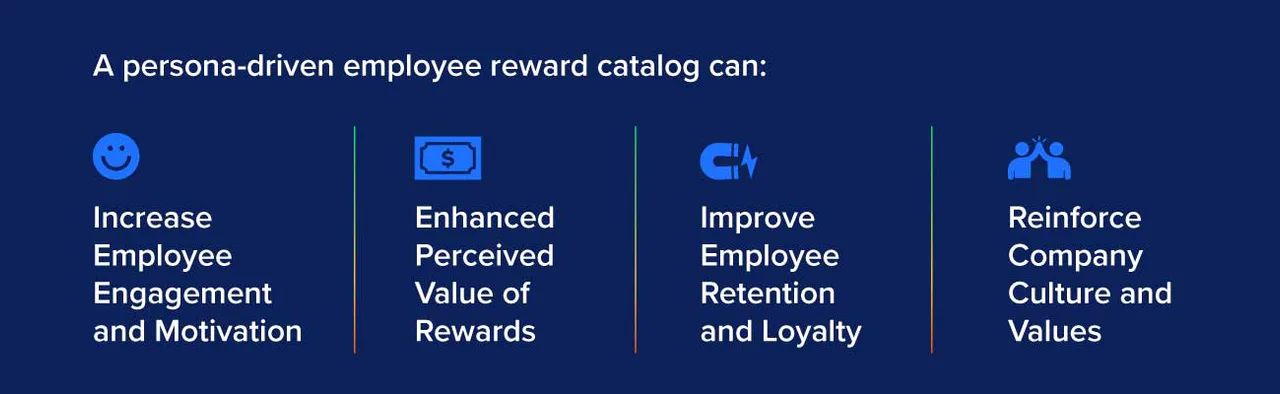
To implement a persona-driven employee reward redemption program, the article recommends conducting employee surveys and focus groups, analyzing redemption data and purchase patterns, collaborating with rewards program providers, and continuously refining and optimizing the program. By embracing persona-driven employee rewards, organizations can unlock a powerful tool for driving engagement, motivation, and retention.
The article emphasizes the importance of providing options for merchandise, experiential rewards, and gift cards, allowing employees to have a sense of agency and choice in their reward experience. By understanding and catering to the diverse preferences and aspirations of their workforce, companies can create meaningful and impactful employee reward programs that foster a culture of recognition, appreciation, and success.
Rogow recommends revisiting the personas as employee preferences change, using redemption histories, surveys and feedback to keep the catalogue relevant. The named personas are illustrative descriptions of reward preferences, rather than fixed categories into which every employee must fit.
Sources and documents
Collapse
- Persona-driven Employee Rewards Boost Engagement — virtualincentives.com
In this article

Daniel Brooks
Daniel Brooks covers payment networks, financial technology, payment security, gift card fraud and PCI DSS for Gift Card News.