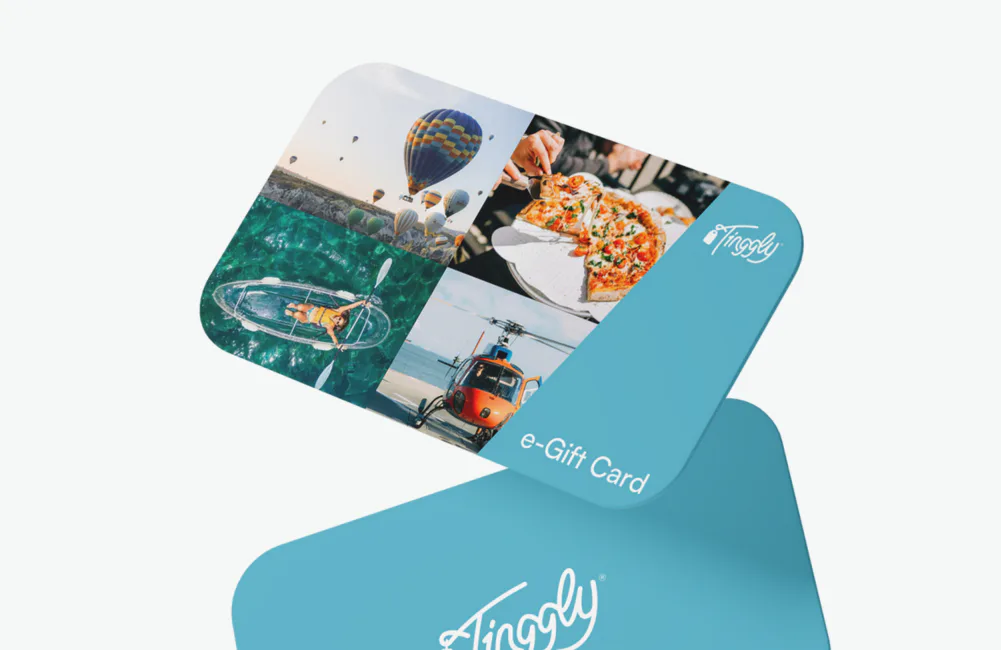
Tinggly introduced themed gift cards on February 3, 2026, adding a monetary balance to its experience-gifting business. The announced cards ranged from $20 to $1,000 and let recipients choose activities or hotel stays rather than accept a booking selected by the giver. [S01]
The change separates the presentation of the gift from the eventual purchase. A theme can make the occasion personal, while the money remains available for the recipient to allocate through the platform.
The recipient chooses how to spend the gift balance
The original announcement gave a $20–$1,000 range for the new themed cards. The current Europe card offers the preset values below and a separate custom-amount field. These options illustrate the buyer’s budget choice, without showing demand or proving which experiences are available at each amount. [S01] [S02]
Preset values on the Europe themed card
The eight labelled quick-select amounts displayed on the Europe Gift Card product page when checked on October 19, 2026.
USD
Tap or hover for details. All values are also available in the data table.
Source
These are eight displayed presets, not purchase frequencies, prices of specific experiences or an exhaustive denomination list. The page also has a custom-amount field. The February launch separately announced a $20–$1,000 range. Current terms say transactions are charged in USD even where another display currency is selected.
Show data tableHide data table
| Category | Preset face value |
|---|---|
| $50 option | 50 USD |
| $100 option | 100 USD |
| $150 option | 150 USD |
| $200 option | 200 USD |
| $250 option | 250 USD |
| $300 option | 300 USD |
| $500 option | 500 USD |
| $1,000 option | 1,000 USD |
Tinggly traces its origins to 2014. Co-founder Linas Ceikus brought experience from the travel industry, while Alex Gibb joined the venture's effort to sell experiences as gifts. The company built its proposition around access to activities rather than manufacturing a physical product. [S03]
Its terms identify Tinggly as a booking intermediary for independent activity suppliers. That means the company connects gift-funded demand with experiences delivered by other businesses, with supplier terms governing the eventual booking. [S04]
The new balance format broadens the spending decision that can happen after the gift is delivered. For Tinggly, it can keep the recipient's selection and any additional purchase on the same platform. For an activity supplier, redemption can bring a customer who arrived through a gifting channel rather than a direct booking search.
The launch described a catalogue of more than 150,000 experiences and stays across over 100 countries, along with bulk purchasing and co-branded corporate vouchers. Those are company-reported catalogue and service claims, not a guarantee of local availability. [S01]
Show data tableHide data table
| Programme decision | Operational implication |
|---|---|
| Choose a gift value | The buyer sets a budget rather than selecting one activity. |
| Explain the account step | Receiving an email and adding the value to a wallet are separate stages. |
| Check local choices | Recipients need realistic booking options near home or a planned destination. |
Tinggly's current Europe card page requires an account, supports partial use and allows recipients to pay a difference. It distinguishes that monetary balance from a gift box containing a curated selection within a price band. The page also says discount codes do not apply to the card. [S02]
This structure can simplify an employer's budget: the sender chooses the value while the recipient chooses the activity. It also leaves a practical question with the recipient. An appealing experience may cost more than the gift, require travel or be unavailable on the desired date.
Refund flexibility has separate contractual conditions
The published terms say experience prices can change and that an extra payment may be required. They distinguish an unbooked gift from a confirmed activity, whose cancellation or rescheduling is governed by the supplier. A flexible balance is therefore different from an unrestricted, refundable booking. [S04]
The current terms offer a 30-day refund window for an unbooked gift purchase and distinguish a 14-day window for corporate orders from the date the initial order was sent. Their qualifying conditions differ, as the chart notes. The corporate service fee is non-refundable; physical delivery charges are also excluded from refunds. An employee’s code can instead be exchanged and reallocated to another recipient. These are current published conditions, rather than a fee schedule disclosed in the February launch. [S04]
Published refund windows distinguish gift buyers
Two expressly stated refund periods in the current terms, with different qualifying conditions and starting events.
days
Tap or hover for details. All values are also available in the data table.
Source
The general unbooked-gift window is 30 days from purchase; corporate orders have 14 days from the initial order being sent. These are contractual refund periods, not gift expiry periods or measured processing times. A booked activity follows supplier cancellation terms. Delivery charges and the corporate service fee are excluded from refunds as specified in the terms.
Show data tableHide data table
| Category | Published refund window |
|---|---|
| Unbooked gift purchase | 30 days |
| Corporate order | 14 days |
The expiry wording is not consistent across the current product page: its banner and general terms say gifts have no expiration date, while the page’s generic FAQ says experience gifts usually expire. The terms separately explain that an unbooked single-experience voucher converts into monetary credit after one year. That conversion is not described as forfeiture of a themed card’s balance, and the conflicting generic FAQ should not be treated as a clear expiry rule for it. [S02] [S04]
The business opportunity is to turn a gift purchase into a later booking relationship, potentially with a top-up. The commercial trade-off includes fulfilment, customer service and the cost of acquiring both buyers and recipients; Tinggly has not disclosed margins for the themed-card product.
The launch expands recipient choice within Tinggly's marketplace. Its usefulness depends on bookable options, clear prices and successful redemption, rather than the catalogue total alone.
In this article

Suzie Elis
Suzie Elis covers gift card products, digital gifting and distribution for Gift Card News.