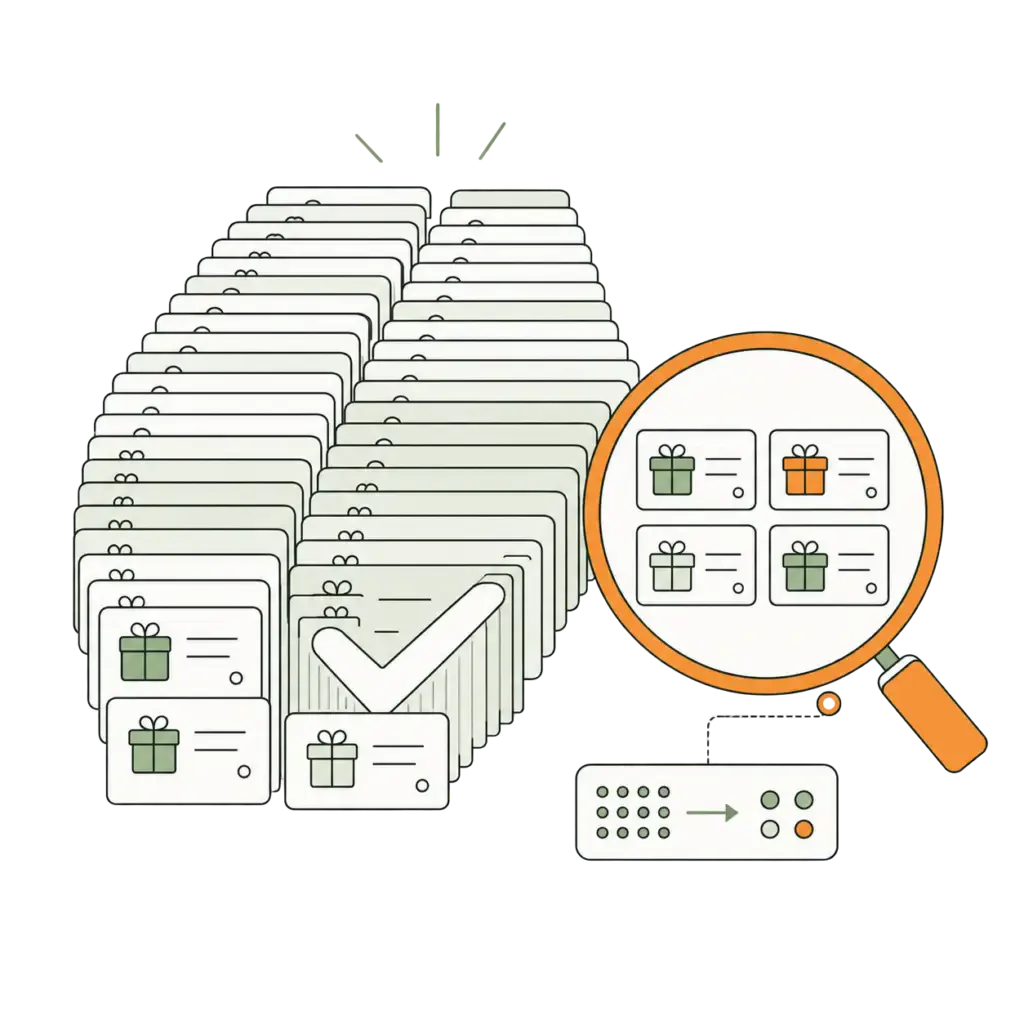
A catalogue containing several denominations of the same gift card does not necessarily offer several distinct merchant choices. TruCentive's August 7, 2026 analysis recommends separating brand counts, redemption locations and supply relationships when comparing reward providers.
The article explains that an international retailer with stores in many countries is counted as one merchant, not multiple reward options. This means that reward and incentive providers can advertise impressive totals without adding new choices. The article suggests that administrators should compare the metrics that describe choice, convenience, and continuity, rather than relying on inflated reward-option totals.
Comparing merchants, redemption locations and supply
To make a credible comparison, the article recommends counting each distinct merchant brand once, after consolidating denominations, formats, language, and currency variants, spelling differences, and duplicate supplier records. This approach measures recipient choice and provides a more accurate picture of the reward catalog.
The source assigns a different purpose to each measure: distinct merchants describe recipient choice; redeemable locations describe convenience; and dependable direct or aggregator supply routes describe continuity. Multiple suppliers for the same brand can provide a backup during an interruption without increasing the number of brands a recipient can choose.
In its August 2026 comparison, TruCentive reported 4,049 audited merchant brands and more than 129,000 local options. It also promoted MultiSelect, automated reminders and a 100% return of unclaimed value on its Pay as You Go offering. These are the provider's point-in-time catalogue and product claims.
The article provides guidance on how to evaluate reward catalogs, including checking for unique merchant counts, location coverage, and supplier relationships. It also recommends identifying which merchants are sourced directly and which come through aggregators, as well as asking how many suppliers contribute and which important merchants have dependable backup sources.
Administrators are advised to find out how often counts are refreshed and likely matches are manually reviewed, as catalogs change with merchants, countries, and supplier agreements. The article concludes that the strongest sourcing model combines direct merchant relationships with multiple aggregators, providing better economics, product knowledge, broader geographic reach, and alternative supply paths.
Ultimately, the article suggests that the largest catalog is not necessarily the one with the most rows, denominations, or storefronts, but rather the one that provides the broadest set of distinct, relevant, and reliably deliverable merchant choices. By presenting figures honestly and separately, administrators can make more informed decisions about reward catalogs.
Sources and documents
Collapse
- Reward Catalog Numbers Mislead — trucentive.com
In this article

Maya Bennett
Maya Bennett covers customer loyalty, employee rewards and incentive programmes for Gift Card News.