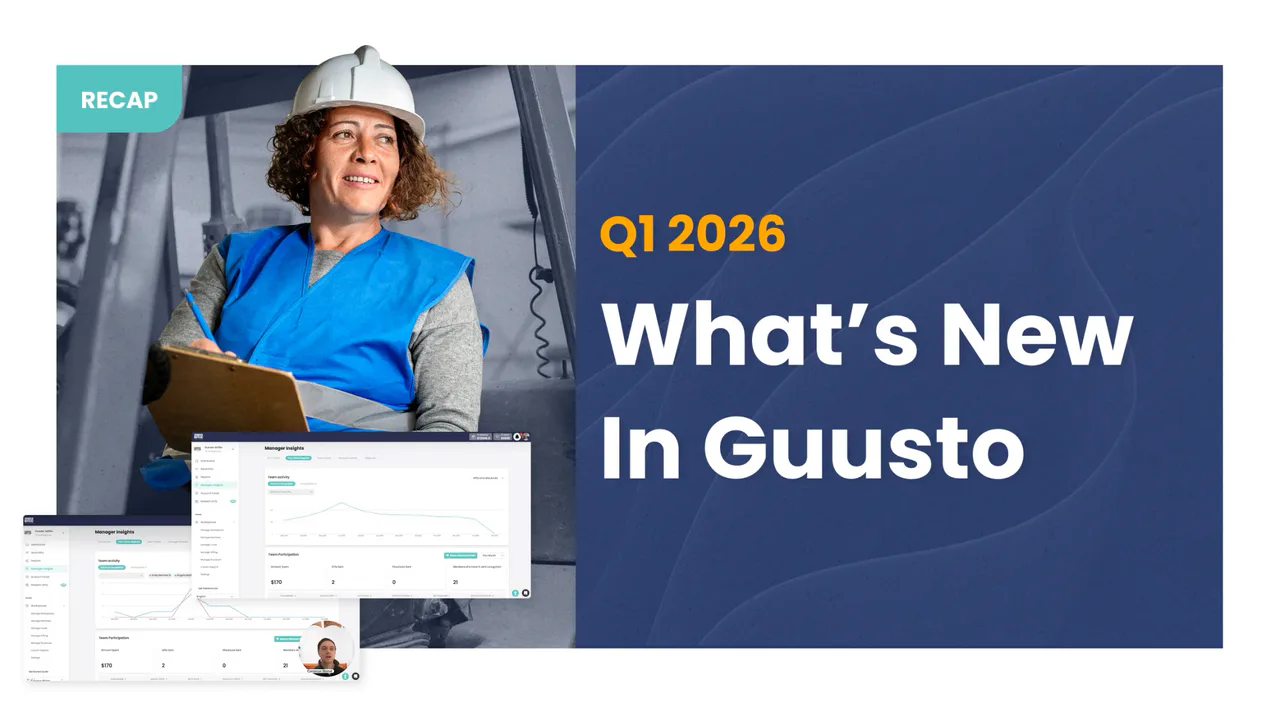
Guusto's March 12, 2026 product update puts managers between digital rewards and employees who may lack a work email address. Alongside expanded recognition reporting, its Manager Delivery feature routes rewards through a supervisor for distribution by print, QR code or link. [S01]
For a gift card platform, that addresses a distribution problem that a larger brand catalogue alone cannot solve. A reward has little practical value if the person who earned it cannot receive or retrieve it through the employer's normal systems.
Tracking funded recognition from manager budget to employee delivery
An earlier customer case illustrates the budget activity that these workflows must track. Guusto's account of Breakthru Beverage says its Canadian leadership team combined manager-funded gifts with non-monetary peer recognition. In the case's authored results text, manager budget usage was 39% in May 2022 and 50% in June. Those are historical programme observations, not results from the Q1 2026 release. [S04]
A historical Guusto customer case tracked manager budget use
Guusto reports these observations for Breakthru Beverage's recognition programme in May and June 2022.
% of manager budget used
Tap or hover for details. All values are also available in the data table.
Source
Provider-authored historical case, not a trial of the 2026 features. The page does not disclose budget amounts, manager count or whether the measurement windows are monthly or cumulative. Budget use is not a gift-card claim rate, retention measure or causal effect.
Show data tableHide data table
| Category | Reported manager budget usage |
|---|---|
| May 2022 | 39 % of manager budget used |
| June 2022 | 50 % of manager budget used |
The case gives neither the underlying budget amounts and manager population nor a clear monthly-versus-cumulative measurement window. Its percentages therefore describe reported budget use only. Guusto's August 14, 2026 measurement guidance separately defines budget usage as allocated funds spent and redemption rate as rewards claimed. That distinction matters when assessing whether a manager issued value and whether an employee received it. [S04] [S05]
Guusto began in 2013 as a consumer service for sending drinks remotely to friends or clients, co-founder Skai Dalziel wrote in the company's history. Its subsequent move into employee recognition built a business around repeated workplace reward delivery. [S03]
The current commercial model combines software subscriptions with merchant-funded gift card economics. Guusto says employers buy gift cards at face value and that it charges merchants. Its plans distinguish sender and recipient seats, so reward budgets and software access are separate costs. [S02]
That helps explain the emphasis on management tools. A gift card catalogue is a fulfilment layer; participation reports, budgets and delivery methods make the service part of an employer's recurring operations.
Show data tableHide data table
| Update | What Guusto describes |
|---|---|
| Manager Insights | Team trends, participation and individual recognition activity |
| Manager Delivery | Manager-assisted distribution when employee contact details are unavailable |
| Integrated merchandise | Branded reward choices within the redemption journey |
The expanded manager dashboard shows participation, individual activity and trends within a team. The update also places branded merchandise alongside existing redemption choices. These were presented as available features in the Q1 showcase, with further reporting work discussed separately as development plans. [S01]
Manager-assisted delivery can extend access without requiring every worker to acquire a corporate email account. It also creates a handoff: the platform routes the reward to a supervisor, who must get it to the intended employee. Tracking an issued reward and confirming that it reached someone remain different operational questions.
For managers, the dashboard can make uneven distribution more visible. It does not, by itself, establish that a reward changed productivity, retention or employee sentiment. Those are outcomes beyond the activity recorded by the software.
Guusto's pricing FAQs say that, on Lite plans and above, unclaimed gifts can be credited back in full. They also say only net funding received is loaded to an account, making payment-method fees relevant to the amount available for rewards. These are current published terms, not a retrospective price quote for March. [S02]
That creates a concrete financial distinction between allocating a budget, issuing a gift and having it claimed. Recovering unclaimed value can prevent a budget from remaining tied to undelivered rewards; better delivery may instead help more recipients use what was intended for them.
For Guusto, reaching frontline teams broadens the situations in which its platform is useful. Deeper manager involvement also creates a reason for an employer to use paid workflow features rather than treat the service as occasional card fulfilment.
The Q1 update is therefore significant as an extension of reward distribution and administration. Its business case rests on reliable delivery and sustained employer use. The announcement offered no controlled evidence that these particular features increased retention or generated incremental profit.
The August 20, 2026 help documentation supplies an implementation condition for this reporting: employee and manager identifiers must be populated for Manager Insights to appear. It describes visibility across direct and indirect reports and a Manager Delivery list for rewards needing intervention. These later documentation details explain the operating requirements; they do not provide a measured change in participation or delivery success. [S06]
In this article

Suzie Elis
Suzie Elis covers gift card products, digital gifting and distribution for Gift Card News.